The shift from frontier models to small language models
The era of scaling up is ending. In 2026, the industry is seeing clear diminishing returns from massive frontier models. Training and running trillion-parameter systems no longer guarantees a competitive edge, especially when the cost of inference becomes prohibitive for daily operations. Instead, the focus is shifting toward specialized, smaller language models (SLMs) that can be fine-tuned for specific tasks.
This transition is driven by practical necessity. As noted by industry analysts, the pressure to differentiate from competitors while controlling costs has made fine-tuned small models the preferred choice for many enterprises. Rather than relying on a generalist giant, companies are now curating smaller, more efficient models that excel in narrow domains. This approach reduces infrastructure overhead and allows for faster, more accurate responses tailored to specific business needs.
The technical reality supports this shift. Fine-tuning a smaller model on a targeted dataset often outperforms a raw, unmodified large model in specific contexts. The efficiency gains are not just marginal; they are structural. By reducing the model size, organizations can deploy solutions that are cheaper to run and easier to maintain, without sacrificing the precision required for high-stakes applications.
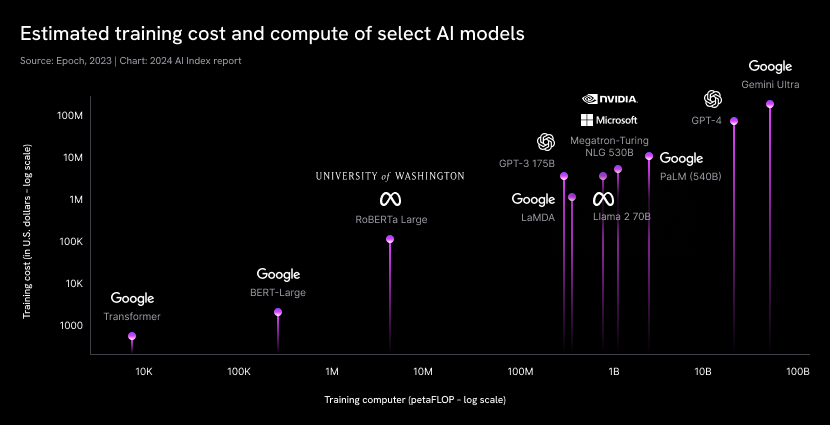
To understand the economic impact, consider the divergence in operational costs. While frontier models continue to grow in complexity, their performance gains per dollar spent are shrinking. Smaller models offer a more sustainable path for scaling AI adoption across an organization.
The chart above illustrates the broader market dynamics influencing hardware and compute costs. As demand for specialized inference shifts, the cost structure for running smaller, optimized models becomes increasingly favorable compared to the massive resources required for generalist systems. This economic pressure is accelerating the adoption of SLMs in 2026.
Comparing fine-tuning providers and infrastructure costs
Choosing the right infrastructure for small language models (SLMs) in 2026 comes down to balancing raw GPU availability against per-hour pricing and framework support. The market has shifted from general-purpose cloud giants to specialized providers that offer granular control over T4, A10, and A100 instances. For SLMs, which require less VRAM than their larger counterparts, you can often achieve significant cost savings by selecting the right tier of hardware rather than defaulting to enterprise-grade clusters.
The following table compares five leading infrastructure providers based on current 2026 market realities. We evaluate them on hourly cost for comparable GPU tiers, native support for popular fine-tuning frameworks like Axolotl and PEFT, and the ease of hardware access. These metrics reflect the current landscape for developers looking to fine-tune models like Llama 3.2 or Mistral Small without overspending on idle resources.
| Provider | Price/Hour (A10G) | Native Framework Support | Primary Hardware |
|---|---|---|---|
| SiliconFlow | $0.45 | Axolotl, PEFT, TRL | Cloud API / Dedicated |
| Vast.ai | $0.28 | Custom Docker (PEFT, Axolotl) | Rental Market (RTX 4090, A100) |
| Together AI | $0.65 | Axolotl, Hugging Face | A100, H100 |
| Hyperstack | $0.55 | Axolotl, PEFT, SFT | A10, A100, H100 |
| Cudo Compute | $0.32 | Custom Docker | RTX 3090, A100 |
While the table provides a snapshot of base pricing, actual costs fluctuate based on demand and spot instance availability. Providers like Vast.ai and Cudo Compute often offer lower base rates by leveraging rental markets, but this can introduce variability in hardware stability. In contrast, SiliconFlow and Together AI provide more consistent environments, which may justify their slightly higher hourly rates for production-grade fine-tuning workflows. It is also worth noting that many providers now bundle framework-specific runtimes, reducing the setup time for PyTorch 2.5+ and CUDA 12.x environments.
For most developers starting with SLMs, the decision often hinges on whether you prioritize lowest possible cost or ease of integration. If you are comfortable managing Docker containers, rental markets like Vast.ai can slash your compute bill by up to 40% compared to managed platforms. However, if your workflow relies heavily on Axolotl or Hugging Face's PEFT library, managed providers like Hyperstack or Together AI offer pre-configured environments that streamline the process, even if the per-hour rate is higher.
When to fine-tune versus using RAG or prompt engineering
Choosing between fine-tuning, Retrieval-Augmented Generation (RAG), and prompt engineering is less about technical superiority and more about matching the tool to the specific constraint of your use case. In 2026, the market reality is that smaller language models (SLMs) like Llama 3.2 or Mistral Small have made fine-tuning significantly cheaper and faster, but they still require careful strategic placement. Over-engineering your pipeline by fine-tuning a model for tasks it can already handle via prompt engineering is a common and costly mistake.
The primary distinction lies in what you are trying to change. RAG is the correct choice when your challenge is knowledge. If your model needs access to up-to-date documents, proprietary databases, or private data that changes frequently, RAG is the superior approach. It keeps the model’s weights static while injecting relevant context at inference time. This is far more cost-effective than retraining a model every time your product catalog or policy updates. Prompt engineering, on the other hand, handles instruction. If you need the model to follow a specific format, adopt a certain tone, or reason through a complex logic puzzle, well-crafted system prompts often suffice without any model modification.
Fine-tuning becomes necessary when you need to change the model’s behavior or style in a persistent way. This includes teaching a model a new vocabulary, enforcing a strict JSON output schema, or adapting its reasoning patterns for a niche domain. For SLMs, this is often done using parameter-efficient methods like LoRA (Low-Rank Adaptation), which allows you to fine-tune a model for a fraction of the cost of full fine-tuning. Think of it as teaching a specific dialect rather than rewriting the entire language.
To visualize the cost-benefit analysis, consider the trade-offs. RAG requires minimal training cost but adds latency due to retrieval steps. Prompt engineering has zero training cost but can become brittle with complex tasks. Fine-tuning incurs upfront training costs and infrastructure time but offers consistent, low-latency performance for specialized tasks. For most legacy WordPress sites or content-heavy applications, starting with prompt engineering and RAG is the prudent first step. Only move to fine-tuning when you hit the limits of what prompts and retrieval can achieve.
Building the 2026 local fine-tuning stack
The foundation for efficient local fine-tuning in 2026 relies on a mature, stable software stack. You need Python 3.11 or later paired with PyTorch 2.5+ and CUDA 12.x. These components provide the necessary hardware acceleration and memory management to run smaller language models (SLMs) on consumer-grade GPUs without excessive overhead.
The Hugging Face ecosystem remains the central hub for this work. Specifically, you should integrate transformers for model loading, datasets for data handling, and peft (Parameter-Efficient Fine-Tuning) for techniques like LoRA. These libraries allow you to fine-tune models with only a fraction of the parameters, drastically reducing the memory footprint and training time required.
For orchestration, Axolotl serves as a high-level configuration wrapper. It streamlines the end-to-end pipeline by managing dependencies and reproducibility, allowing you to focus on the model architecture rather than environment setup. This tool is particularly valuable for teams looking to standardize their fine-tuning workflows across multiple projects.

Checklist for launching a custom AI model
Before committing compute resources, validate your readiness with this pre-flight checklist. This ensures your project aligns with cost-effective fine-tuning strategies using small language models (SLMs).
Clean and structure your training dataset. SLMs require less data than large models, but it must be high-quality and relevant to your specific use case.
Choose a lightweight model like Gemma or Llama 3.8B that fits your hardware constraints. Smaller models reduce inference costs significantly while maintaining performance for niche tasks.
Establish clear benchmarks for accuracy, latency, and token usage. Without measurable goals, it is difficult to assess whether the fine-tuning process delivers value over a zero-shot approach.
Estimate GPU hours and cloud costs. Use provider-backed tools to forecast expenses, ensuring the project remains financially viable before starting the training loop.
No comments yet. Be the first to share your thoughts!