
In the rush to deploy agentic AI services that respond in milliseconds, developers are ditching bloated large language models for tiny, fine-tuned alternatives. These small language models (SLMs), often under 1 billion parameters, power low-latency agents on edge devices and blockchain-integrated platforms. Premium datasets tailored for fine-tuning datasets tiny models are the secret sauce, enabling precise tool-calling and decision-making without the cloud's drag. Platforms like FineTuneMarket. com make these datasets discoverable and transactable via onchain payments, ensuring creators earn royalties on every deployment.
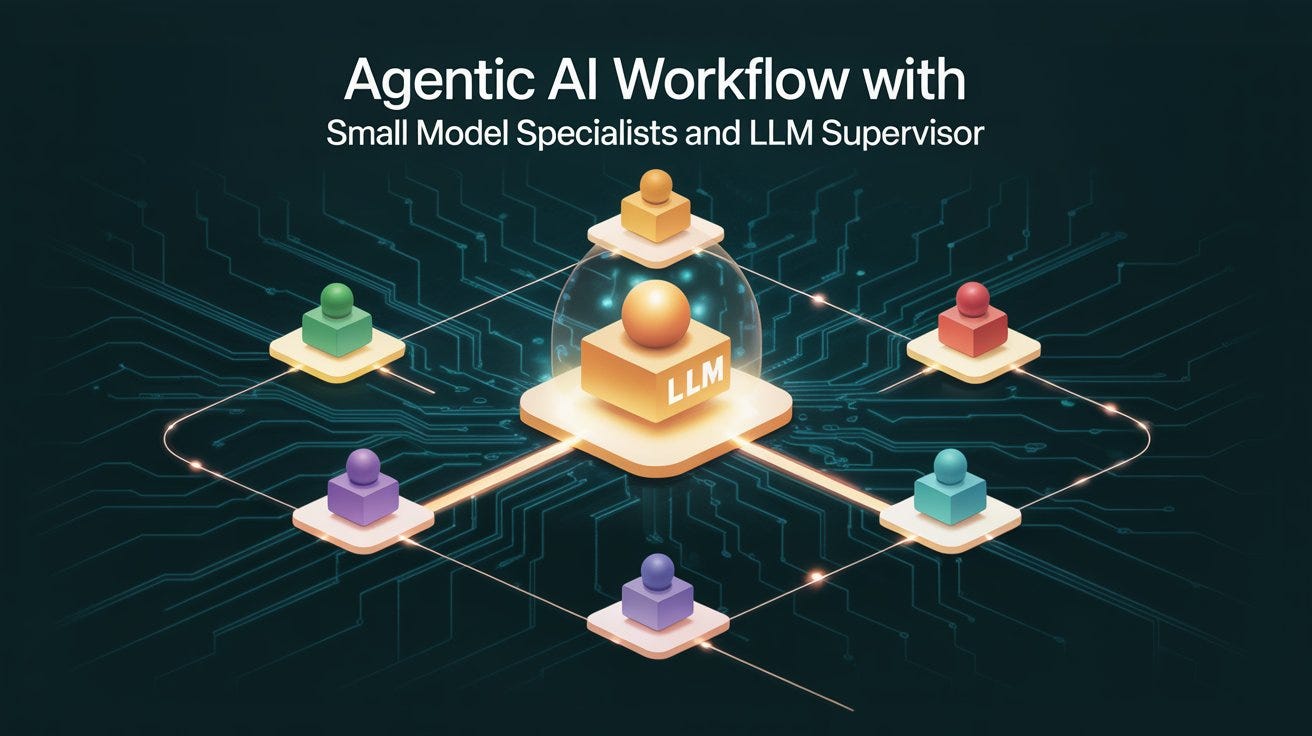
The appeal is straightforward: agentic services demand autonomy and speed. A financial query agent can't afford a half-second delay when markets move in microseconds. Recent experiments, like fine-tuning SLMs on subsets of Salesforce's xlam-function-calling-60k dataset using LoRA adapters, show accuracy rivaling giants while slashing inference time. Apple's MLX framework accelerates this on consumer hardware, proving you don't need data centers for expert agents.
Why Tiny Models Dominate Low-Latency Agentic Workflows
SLMs shine in agentic setups because they process locally, sidestepping network latency and privacy pitfalls. Studies like TinyAgent from Berkeley highlight quantization techniques that shrink models for mobile deployment, maintaining function-calling prowess. PockEngine's sparse backpropagation further optimizes fine-tuning on edge hardware, yielding 4x speedups. This isn't hype; Robinhood's multi-stage optimizations cut latency over 50% in financial agents, all via targeted fine-tuning.
Efficient LoRA Fine-Tuning of TinyLlama on Custom Datasets
To build low-latency expert agents, fine-tune tiny LLMs like TinyLlama using LoRA on premium custom datasets sourced from onchain marketplaces. This QLoRA example, inspired by James Briggs' tutorials, enables efficient training on consumer hardware while preserving base model performance.
import torch
from datasets import load_dataset
from peft import LoraConfig, get_peft_model, TaskType
from transformers import (
    AutoModelForCausalLM,
    AutoTokenizer,
    BitsAndBytesConfig,
    TrainingArguments,
    Trainer,
    DataCollatorForLanguageModeling,
)

# Load tiny model and tokenizer with 4-bit quantization for efficiency
model_name = "TinyLlama/TinyLlama-1.1B-Chat-v1.0"

bnb_config = BitsAndBytesConfig(
    load_in_4bit=True,
    bnb_4bit_use_double_quant=True,
    bnb_4bit_quant_type="nf4",
    bnb_4bit_compute_dtype=torch.bfloat16,
)

model = AutoModelForCausalLM.from_pretrained(
    model_name,
    quantization_config=bnb_config,
    device_map="auto",
    trust_remote_code=True,
)
tokenizer = AutoTokenizer.from_pretrained(model_name)
if tokenizer.pad_token is None:
    tokenizer.pad_token = tokenizer.eos_token
tokenizer.padding_side = "right"

# Load custom dataset (JSONL/JSON with 'instruction' and 'output' fields)
dataset = load_dataset("json", data_files="your_custom_dataset.json", split="train")

def format_instruction(example):
    return f"<|system|>\nYou are a helpful agent.<|user|>\n{example['instruction']}<|assistant|>\n{example['output']}<|endoftext|>"

# Apply formatting and tokenize
def tokenize_function(examples):
    texts = [format_instruction(ex) for ex in examples]
    return tokenizer(texts, truncation=True, padding="max_length", max_length=512, return_tensors="pt")

tokenized_dataset = dataset.map(
    lambda x: tokenize_function([x]), batched=False, remove_columns=dataset.column_names
)

# LoRA configuration for parameter-efficient fine-tuning
peft_config = LoraConfig(
    task_type=TaskType.CAUSAL_LM,
    inference_mode=False,
    r=16,
    lora_alpha=32,
    lora_dropout=0.05,
    target_modules=["q_proj", "k_proj", "v_proj", "o_proj"],
)

model = get_peft_model(model, peft_config)

# Training arguments optimized for low-resource fine-tuning
training_args = TrainingArguments(
    output_dir="./lora-tinyllama",
    num_train_epochs=3,
    per_device_train_batch_size=2,
    gradient_accumulation_steps=8,
    learning_rate=2e-4,
    fp16=True,
    logging_steps=10,
    save_steps=500,
    optim="paged_adamw_8bit",
    warmup_steps=100,
    report_to=None,
)

trainer = Trainer(
    model=model,
    args=training_args,
    train_dataset=tokenized_dataset,
    data_collator=DataCollatorForLanguageModeling(tokenizer, mlm=False),
)

trainer.train()

# Save the LoRA adapter
model.save_pretrained("lora-adapter")
Post-training, merge the LoRA adapter (`peft_model.merge_and_unload()`) for streamlined inference. This yields compact, specialized models ideal for real-time agentic services, minimizing latency in onchain environments.
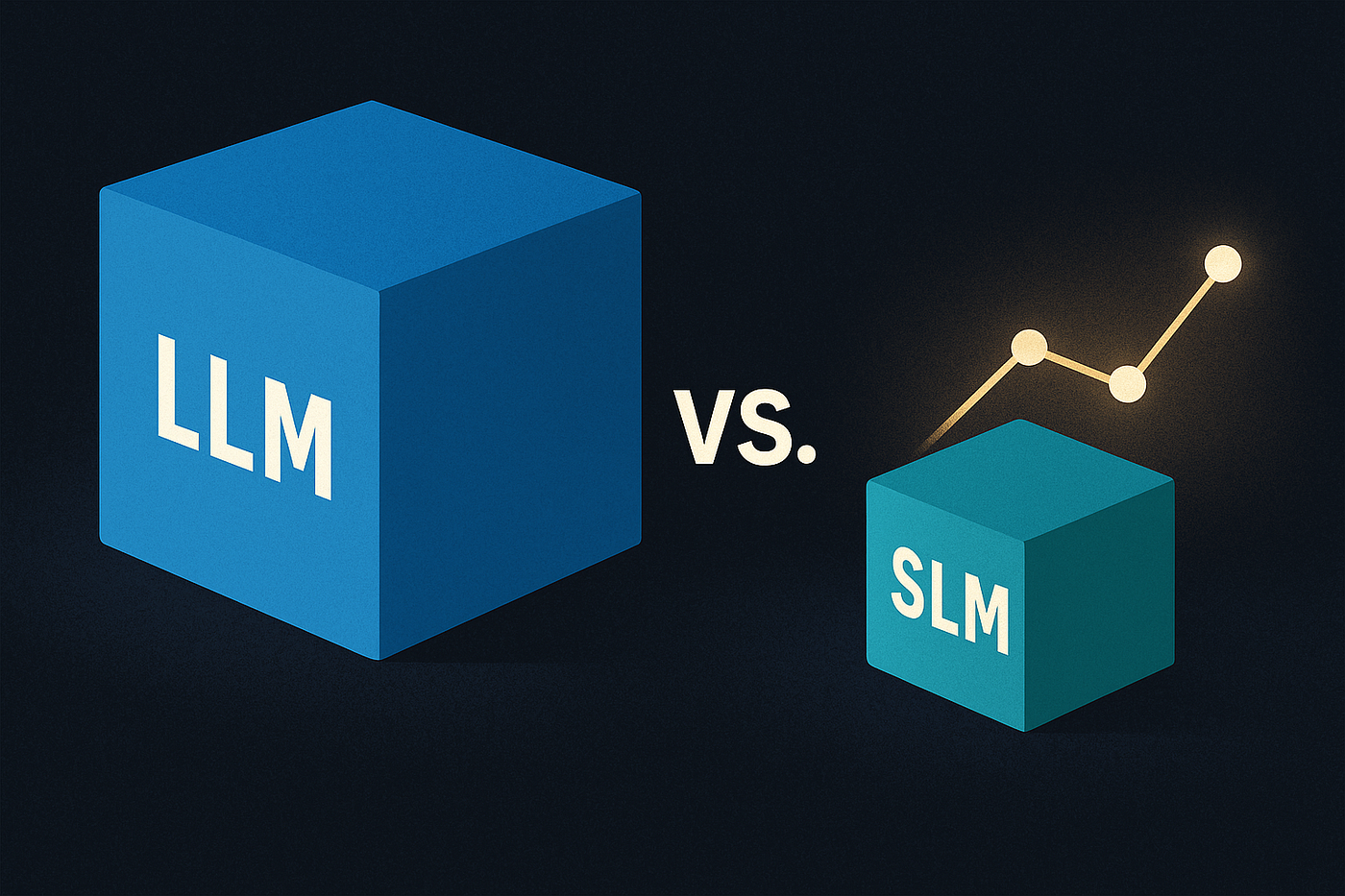
Contrast this with LLMs: fine-tuning them costs thousands and demands massive compute. SLMs, trained on curated, domain-specific data, flip the script. Distillation from larger models, paired with programmatic curation, delivers 30x cheaper inference. For onchain marketplaces, where agents execute smart contracts or verify transactions, this efficiency is non-negotiable.
Premium Datasets as the Backbone of Compact LLM Fine-Tuning
Raw data won't cut it; premium, licensed datasets remove legal headaches and boost performance. Opendatabay's AI-ready collections and Databricks' ecommerce QA pairs exemplify low latency agentic AI datasets, hybrid synthetic sets optimized for models like Mistral or OpenELM. These aren't scraped scraps; they're validated for tool-calling precision, reducing hallucinations in agentic loops.
Premium Dataset Advantages
- Licensed for Compliance: Providers like Opendatabay deliver licensed, AI-ready datasets that eliminate legal risks in LLM fine-tuning.
- Targeted for SLMs: Optimized for small language models with curated, domain-specific data to cut hallucinations, as in Cogito Tech OTS datasets.
- Onchain Perpetual Royalties: Blockchain tokenization enables ongoing creator royalties in agentic AI marketplaces.

- Multilingual Domain-Specific: Cover diverse languages and sectors like Databricks' Retail Ecommerce QA Pairs for Mistral fine-tuning.
- Proven in LoRA Experiments: Effective in LoRA fine-tuning, e.g., Salesforce xlam-function-calling-60k on Apple's MLX framework.
On FineTuneMarket. com, such compact LLM fine-tuning datasets trade seamlessly. Creators tokenize assets, buyers fine-tune instantly, and blockchain ensures provenance. FinAgentBench datasets sharpen financial retrieval, while Tiny-TSM proves lightweight models excel in time-series agents with single-GPU training. BerryBytes and Microsoft's Foundry tools streamline this, blending synthetic data with agentic reinforcement.
Onchain Marketplaces Unlock Scalable Dataset Ecosystems
Blockchain marketplaces transform datasets from static files to living assets. Onchain payments AI datasets enable micropayments per use, fostering niche collections for agentic niches like Web3 monetization. Monetizely notes how agentic AI pairs with decentralized infra for verifiable actions. Centific emphasizes SLMs' targeted datasets demand human oversight, but marketplaces curate this at scale.
Imagine provisioning a DeFi agent with tokenized, fine-tuned datasets: instant purchase, perpetual royalties, zero intermediaries. Thin Agents frameworks like Unsloth expedite local tuning, aligning perfectly with blockchain marketplace fine-tune datasets. This ecosystem isn't emerging; it's here, powering offline, compliant agents that outperform cloud behemoths in responsiveness.
Developers chasing sub-100ms responses know this setup delivers: a quantized TinyAgent calling functions on-device, fed by FinAgentBench data for sharp financial retrieval. No more waiting on API roundtrips that expose strategies to competitors.
Real-World Wins: SLMs Powering Agentic Edges
Robinhood's playbook stands out. Their agents, fine-tuned via multi-stage pipelines, slashed latency over 50% while matching bloated models' quality. Swap in datasets from FineTuneMarket. com, and you replicate this for DeFi or NFT marketplaces. Microsoft's Foundry at Ignite 2025 amps it up with synthetic data gen and GPT-5 reinforcement, but the real edge lies in SLMs dodging those compute bills entirely. BerryBytes tailors this for enterprises, proving fine-tuning datasets tiny models scale beyond labs.
Comparison of SLM Fine-Tuning Approaches
| Method/Dataset | Framework | Latency Gain | Use Case |
|---|---|---|---|
| LoRA on xlam-60k | MLX | 4x edge speedup | Agentic tool calling |
| PockEngine sparse | Tiny-TSM | 30x cheaper inference | Time-series agents |
| Distillation programmatic | Unsloth | 50% latency cut | Financial QA |
These aren't isolated wins. Berkeley's TinyAgent deploys function-callers on phones via quantization, while TinyLLM optimizes hybrids for edge accuracy. Distillation shines too: curate outputs from giants, fine-tune tinies, pocket 4x faster inference at 30x less cost. Unsloth frameworks make it dead simple locally, perfect for prototyping low latency agentic AI datasets before onchain launch. Skeptics cling to LLMs, but charts don't lie: latency curves favor SLMs when datasets punch above their weight.
Premium data isn't a luxury; it's the multiplier turning compact models into production beasts.
Take ecommerce: Databricks' QA pairs, synthetic yet grounded, hone Mistral agents for conversational carts. Fine-tune on consumer GPUs, deploy to blockchain oracles verifying orders. Or finance: FinAgentBench hones retrieval, ensuring agents snag precise passages amid market noise. Creators on onchain payments AI datasets platforms tokenize these, earning per inference as agents proliferate. It's a flywheel: better data breeds better models, fueling more niche collections.
[h2 class="subheading ">Building Your Low-Latency Agentic StackStart lean. Grab a compact LLM fine-tuning datasets from FineTuneMarket. com - say, tool-calling for Web3. Use LoRA on MLX for Apple silicon or Unsloth for NVIDIA. Quantize post-tune with TinyAgent tricks, test on PockEngine for sparsity gains. Integrate blockchain hooks: agents call smart contracts natively, payments flow onchain. Cogito's off-the-shelf sets kickstart multilingual agents, slashing hallucination risks. Oversight matters; Centific nails it - human-curated slices ensure SLMs don't wander.
This stack thrives in agentic loops: observe, plan, act, reflect - all under 50ms. Blockchain marketplaces like ours supercharge discovery: filter by latency benchmarks, buy with one tx, fine-tune instantly. No NDAs, no middlemen; provenance etched forever. Towards AI pegs SLMs as the future for offline privacy, and they're right - especially when royalties incentivize creators to obsess over quality.
- Edge deployment slashes costs 30x.
- Tokenized datasets yield perpetual cuts.
- Hybrid synth-human data crushes raw scrapes.
Financial desks I've charted for years taught me patterns repeat: early adopters win big. Ignore SLM fine-tuning now, and your agents lag in a world demanding microseconds. FineTuneMarket. com flips datasets into assets, onchain payments fueling an explosion of blockchain marketplace fine-tune datasets. The truth? Tiny models, premium fuel, blockchain rails - that's the unbeatable reversal play in agentic AI. Deploy today; the edge is yours.




No comments yet. Be the first to share your thoughts!