
The 2026 volatility landscape
The market for artificial intelligence in 2026 has shifted from experimental adoption to rigorous execution. Generative AI tools now deliver an estimated $172 billion in annual value to U.S. consumers, a figure that has tripled in median user value over the last year Stanford AI Index Report. This surge has not stabilized prices or expectations; instead, it has intensified the competitive pressure on enterprises to prove ROI, creating a volatile environment where strategy matters more than technology alone.
Volatility in this sector is no longer just about stock price fluctuations. It encompasses the rapid obsolescence of legacy models, shifting regulatory frameworks, and the intense churn of talent. As noted in PwC’s 2026 AI Business Predictions, companies are moving away from siloed experiments toward top-down, enterprise-wide strategies. This centralization is a direct response to the chaos of the previous year, where fragmented AI deployments failed to scale.
For market strategists, this means the old playbook of "move fast and break things" is obsolete. The current landscape demands precision. Capital is flowing toward solutions that integrate seamlessly with existing workflows rather than those promising revolutionary breakthroughs. The winners in 2026 are not those with the most advanced models, but those with the most resilient execution frameworks.
The chart above illustrates the broader market volatility index (VIX) trends, serving as a proxy for the risk appetite driving AI investment. While AI-specific volatility metrics are still emerging, the correlation between general market uncertainty and tech sector investment is clear. In this environment, fine-tuning your strategy for volatility is not optional—it is the primary determinant of survival.
Why generic models fail in high-stakes trading
Generic large language models and foundation AI tools are built for breadth, not precision. In the volatile markets of 2026, this generalization becomes a liability. A model trained on broad internet text lacks the nuanced understanding of real-time order flow, microstructure noise, and sudden liquidity shifts that define modern trading environments.
When you deploy a generic model, it applies average-case logic to extreme-case scenarios. This leads to delayed reactions and mispriced risks. Fine-tuning changes the geometry of the model's decision-making. By training on specific market data—historical price action, sentiment analysis from verified financial news, and proprietary execution logs—the model learns the unique language of your specific asset class.
The difference is not just incremental; it is structural. Generic models might correctly identify a trend line, but they often miss the context of a sudden regulatory announcement or a flash crash. Fine-tuned models, however, are calibrated to recognize these anomalies as critical signals rather than noise. This specificity reduces false positives and improves the accuracy of execution timing.
Fine-tuned vs. generic models: A direct comparison
To understand the operational impact, we must look at how these two approaches handle the core metrics of algorithmic trading. The table below contrasts the performance characteristics of generic AI against models fine-tuned for specific market volatility.
| Metric | Generic AI Model | Fine-Tuned AI Model |
|---|---|---|
| Data Latency | High (100ms+) due to broad inference | Low (<10ms) via optimized local inference |
| Specificity | Low (General knowledge base) | High (Proprietary market data only) |
| Risk Exposure | High (Prone to hallucination in edge cases) | Low (Constrained by verified historical patterns) |
| Execution Speed | Variable (Dependent on cloud API load) | Consistent (Dedicated hardware allocation) |
The shift from generic to fine-tuned models represents a move from experimentation to execution. As industry reports indicate, by 2026, enterprises are increasingly relying on task-specific AI agents that are deeply integrated into their operational workflows. This is not about having a smarter generalist; it is about having a specialized tool that understands the exact constraints of your trading strategy.
Generic models serve as excellent brainstorming partners for high-level strategy, but they lack the rigor required for live capital deployment. Fine-tuned models, by contrast, act as precise instruments. They do not guess; they calculate based on the specific probabilities inherent to your market segment. This distinction is what separates successful algorithmic trading from costly errors in a volatile landscape.
Onchain payments and settlement
Onchain payments are shifting from experimental features to the backbone of fine-tuned marketplace operations. By moving settlement onchain, platforms can leverage smart contracts to automate complex transactions, ensuring that funds are released only when specific conditions are met. This shift directly addresses the counterparty risk that has historically plagued digital marketplaces, particularly in high-volatility environments.
The integration of onchain settlement offers three distinct advantages: speed, transparency, and reduced risk. Traditional banking settlements can take days, during which market conditions may shift dramatically. Onchain transactions, particularly on high-throughput layer-2 networks, settle in seconds. This speed allows marketplaces to react instantly to price fluctuations, protecting both buyers and sellers from slippage.
Transparency is equally critical. Every transaction is recorded on a public ledger, providing an immutable audit trail. This visibility builds trust among users who might otherwise hesitate to engage with new or fine-tuned AI-driven platforms. When combined with automated escrow smart contracts, the need for manual intervention is minimized, reducing operational overhead and the potential for human error.
To contextualize the asset class often used for these settlements, here is the current price of Bitcoin, which frequently serves as a bridge asset or reserve currency in decentralized marketplaces:

While onchain payments offer significant benefits, they are not without challenges. Network congestion and gas fees can sometimes offset the speed advantages, particularly during peak market activity. However, advancements in layer-2 scaling solutions and alternative consensus mechanisms are rapidly mitigating these issues. As the infrastructure matures, onchain settlement will likely become the default for high-frequency, low-margin trading environments.
The move toward onchain payments is not just a technological upgrade; it is a fundamental restructuring of trust. By removing intermediaries and automating compliance through code, marketplaces can operate with greater efficiency and resilience. This shift aligns with the broader trend of AI-driven marketplaces seeking to reduce friction and enhance user experience through transparent, automated processes.
Algorithmic trading optimization
Algorithmic trading optimization uses automated systems to execute trades based on pre-set rules, helping investors manage risk and capture opportunities in volatile markets. By removing human emotion, these systems can react to market changes in milliseconds, a speed impossible for manual traders to match. In 2026, with generative AI valued at $172 billion annually for U.S. consumers, the integration of advanced analytics into trading algorithms has become standard practice for both institutional and retail investors.
The process involves several key steps to ensure strategies remain effective as market conditions shift.
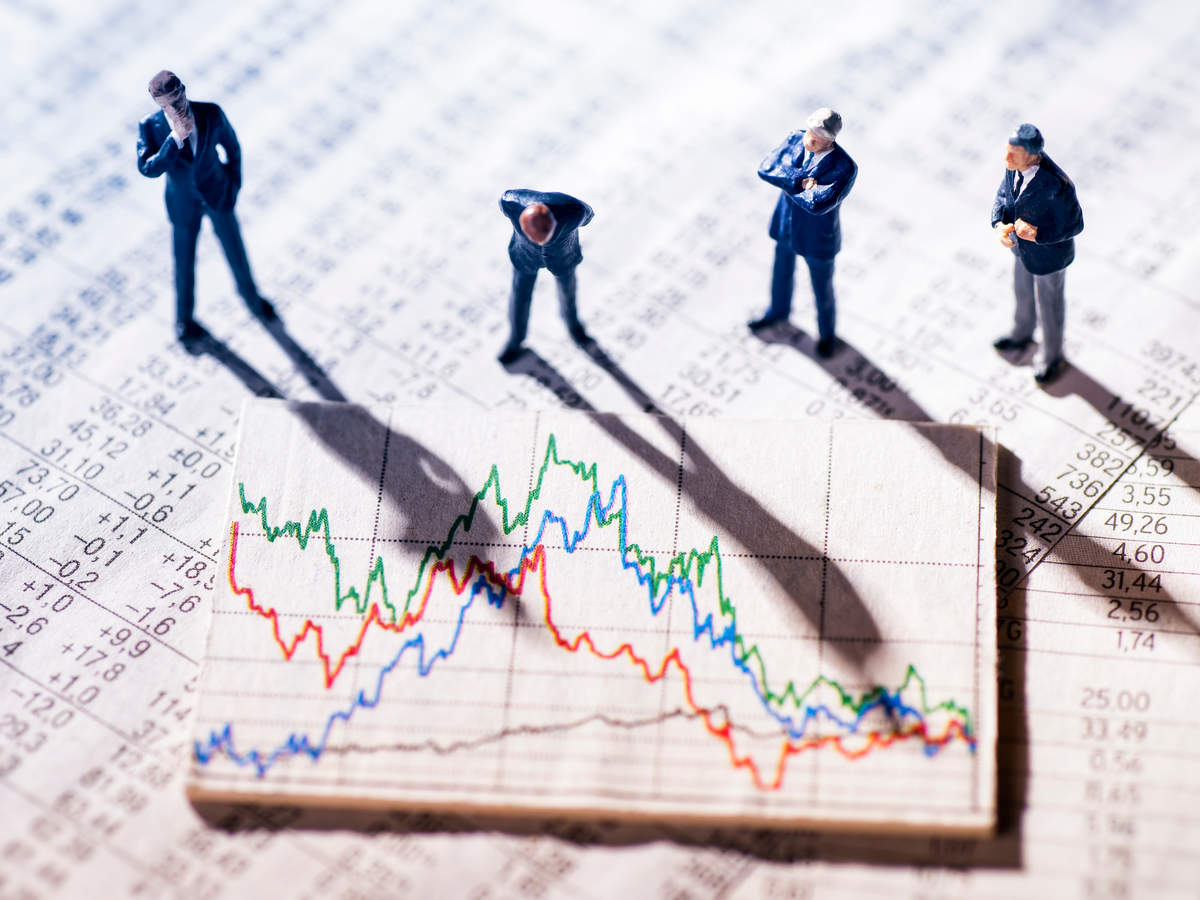
Start by establishing clear entry and exit points based on technical indicators or fundamental data. This might involve setting specific price thresholds, moving average crossovers, or volatility bands. The goal is to create a rule-based system that leaves no room for interpretation during execution.

Before deploying capital, run your strategy against historical market data to see how it would have performed in past scenarios. This step helps identify potential flaws and estimate risk-adjusted returns. It is crucial to test across different market cycles, including periods of high volatility, to ensure robustness.

Connect the algorithm to live market feeds. Modern systems often use AI to adjust parameters dynamically based on real-time news sentiment or macroeconomic indicators. This allows the strategy to adapt to sudden market shifts without manual intervention.
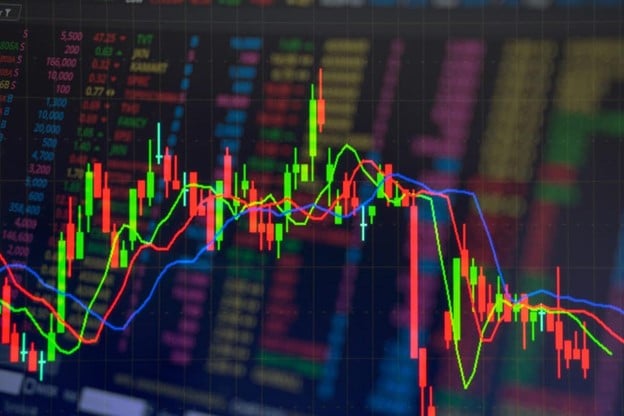
Continuous monitoring is essential. Track performance metrics such as Sharpe ratio, maximum drawdown, and win rate. Regularly refine the strategy to account for changing market dynamics and avoid overfitting to past data.
To illustrate the impact of these optimizations, consider the performance of major indices during recent volatile periods. The following chart shows the price action of the S&P 500, a common benchmark for algorithmic strategies.
Optimization is not a one-time task but an ongoing process. As market structures evolve, so too must the algorithms that navigate them. By adhering to a disciplined, data-driven approach, traders can better manage the inherent uncertainties of financial markets.
Implementation checklist for AI market strategy
Implementing an AI-driven strategy for 2026 requires moving from experimentation to execution. As noted by PwC, the leading companies are adopting enterprise-wide, top-down programs rather than isolated pilot projects. This section provides a clear, actionable set of steps to evaluate and implement your AI market strategy, ensuring it is robust enough to handle volatility.
Start by verifying the quality and accessibility of your data. AI models are only as good as the data they are trained on. Ensure your datasets are clean, up-to-date, and representative of current market conditions. For 2026, this means integrating real-time data streams alongside historical records to capture sudden market shifts.
Before deploying any AI model into production, rigorously backtest it against historical market data. This step is critical for understanding how your strategy would have performed during past periods of volatility. Use stress testing to simulate extreme market scenarios and identify potential weaknesses in your algorithm before they cause real financial loss.
Set clear, automated risk limits for your AI-driven trades. Volatility can trigger rapid losses, so your system must have hard stops that cannot be overridden by the model’s predictions. Define maximum position sizes, drawdown thresholds, and exposure limits to protect your portfolio from catastrophic errors.
Connect your AI strategy to your trading execution platform. This integration should be seamless, allowing for instant order placement and real-time monitoring. Ensure that your execution algorithms are optimized for speed and slippage, particularly in fast-moving markets where milliseconds matter.
AI models drift over time as market conditions change. Establish a continuous monitoring framework to track model performance against benchmarks. Regularly review the model’s decisions and retrain it with new data as necessary to maintain accuracy and relevance in the 2026 market landscape.
| Step | Action | Priority |
|---|---|---|
| 1 | Audit data sources | High |
| 2 | Backtest models | High |
| 3 | Define risk limits | Critical |
| 4 | Integrate execution | Medium |
| 5 | Monitor and adjust | Ongoing |
Implementing an AI market strategy for 2026 is not a one-time event but a continuous process of refinement. By following these steps, you can build a system that leverages AI’s power while mitigating its risks, positioning your business for success in an increasingly volatile market.
Market predictions for 2026
The AI market is shifting from experimental adoption to entrenched utility. By early 2026, the estimated value of generative AI tools to U.S. consumers reached $172 billion annually, with the median value per user tripling from the previous year [1]. This growth signals that AI is no longer a speculative asset but a core component of consumer and enterprise behavior.
What is the AI market prediction for 2026?
Enterprise adoption is accelerating faster than consumer metrics. Experts predict that 40% of enterprise applications will utilize task-specific AI agents by 2026 [2]. This transition moves businesses away from generic chatbots toward specialized tools that automate complex workflows, driving efficiency gains that are now visible in quarterly earnings reports.
How to make money with AI in 2026?
Profitability in 2026 comes from integration rather than creation. Companies that embed AI directly into existing software stacks are seeing higher ROI than those building standalone AI products. Investors are focusing on firms that can demonstrate clear cost reductions or revenue growth through AI-driven automation, particularly in sectors like healthcare, finance, and logistics.
What is a $900,000 AI job?
The $900,000 AI job typically refers to roles in high-frequency trading or algorithmic finance where AI models directly manage capital. These positions require deep expertise in machine learning, quantitative analysis, and risk management. The high compensation reflects the direct impact these individuals have on firm profitability through automated trading strategies and market prediction models.
Which 5 jobs will survive AI?
Jobs requiring complex physical dexterity, high-stakes decision-making, and deep human empathy remain resistant to automation. The five most resilient roles include:
- Skilled Trades: Plumbers, electricians, and construction workers perform unpredictable physical tasks in unstructured environments.
- Healthcare Providers: Nurses, therapists, and doctors provide empathetic care and make critical ethical decisions that AI cannot replicate.
- Creative Directors: While AI generates content, human directors provide the strategic vision, cultural context, and emotional nuance needed for brand storytelling.
- Legal Judges and Arbitrators: These roles require interpreting nuanced human intent and applying complex legal precedents with moral reasoning.
- Senior Executives: CEOs and board members navigate political, ethical, and strategic challenges that require human judgment and accountability.
[1] https://hai.stanford.edu/ai-index/2026-ai-index-report [2] https://www.decisiondigital.com/the-future-of-ai-in-business-strategy-for-2026/
No comments yet. Be the first to share your thoughts!