
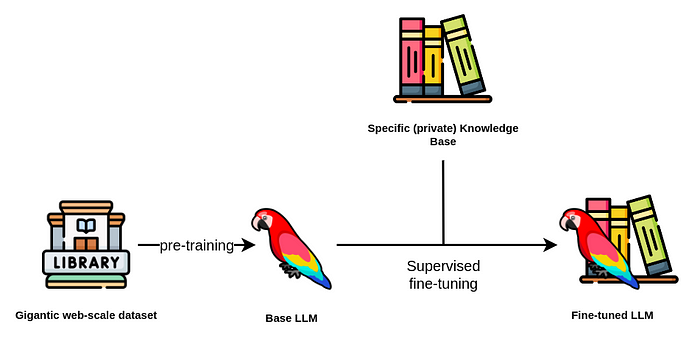
Why fine-tuning matters in 2026
The era of paying premium prices for generic, frontier-scale models is ending. By 2026, the primary driver of AI return on investment is shifting from raw parameter count to specialized, fine-tuned small models. This transition is not merely a technical preference; it is an economic necessity as companies face diminishing returns from general-purpose large language models while simultaneously under pressure to improve profit margins.
Fine-tuning allows organizations to adapt smaller, more efficient models to specific domains using techniques like LoRA, QLoRA, and DPO. The result is a system that performs complex, industry-specific tasks with the accuracy of a much larger model but at a fraction of the inference cost. As noted by industry observers, 2026 marks the year where these fine-tuned small models become the standard for sustainable AI deployment.
This shift democratizes access to high-performance AI. You no longer need a massive machine learning team or expensive GPU clusters to achieve competitive results. Instead, you can leverage existing infrastructure to train models that understand your unique data, resulting in faster response times, lower latency, and significantly reduced operational expenses.
5 AI Model Fine-Tuning Strategies for 2026 ROI
In 2026, ROI hinges on precision engineering, not abstract theory. This section details concrete fine-tuning strategies—including LoRA, QLoRA, and DPO—backed by official technical documentation to maximize efficiency and minimize compute costs.
-
Use LoRA for efficient parameter updates
Low-Rank Adaptation freezes pre-trained weights and injects trainable rank decomposition matrices into each layer. This approach drastically reduces the number of trainable parameters, allowing engineers to fine-tune large language models on consumer-grade GPUs. By updating only a tiny fraction of the model's total weights, teams achieve significant cost savings while maintaining near-full fine-tuning performance for specific downstream tasks. -
Apply QLoRA for memory-constrained hardware
Quantized Low-Rank Adaptation combines 4-bit normal floats with LoRA to minimize memory footprint. This technique enables fine-tuning of 65-billion parameter models on single GPUs, removing the need for expensive multi-GPU clusters. The quantization introduces negligible accuracy loss while maximizing hardware utilization, making high-performance model adaptation accessible to smaller engineering teams with limited infrastructure budgets. -
Focus on instruction tuning for behavior
Instruction tuning aligns model outputs with human expectations by training on curated question-answer pairs. This process teaches the model to follow specific prompts rather than just predicting the next token. By curating high-quality datasets that reflect desired business logic, organizations ensure consistent, reliable responses across customer-facing applications without requiring extensive post-processing or rule-based overrides. -

Optimize with DPO for preference alignment
Direct Preference Optimization simplifies alignment by directly optimizing the policy against human preference data, bypassing the complex reward model training of RLHF. This streamlined approach reduces computational overhead and training instability. Teams achieve faster convergence to desired behavioral outputs, ensuring models adhere to safety guidelines and brand voice with greater efficiency and lower infrastructure costs. -
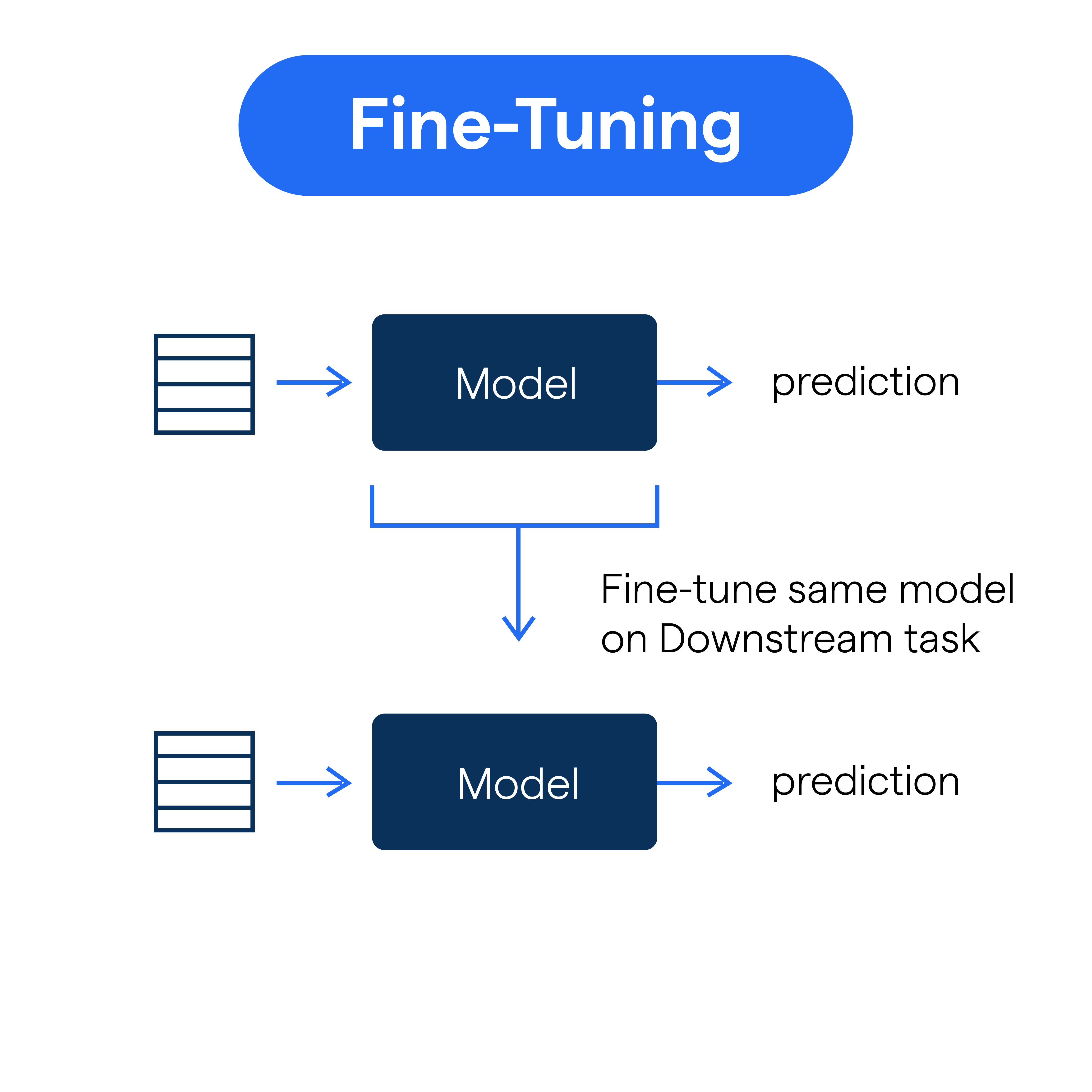
Combine RAG with fine-tuning for accuracy
Pairing Retrieval-Augmented Generation with fine-tuning addresses hallucination issues by grounding model responses in verified data. While RAG provides fresh context, fine-tuning ensures the model effectively synthesizes this information using domain-specific terminology. This hybrid strategy delivers high-accuracy results for specialized financial queries, reducing the need for constant model retraining while maintaining strict data privacy and compliance standards.
Common questions about 2026 fine-tuning
Helpful gear
Use these product recommendations as a starting point, then choose the size, material, and price point that fit how you actually use the gear.


As an Amazon Associate, we may earn from qualifying purchases.
No comments yet. Be the first to share your thoughts!