
The 2026 ai agent economy: real limits to account for
The promise of agentic AI is no longer theoretical. Recent estimates suggest agentic AI could deliver $3 trillion in corporate productivity gains globally over the next decade, with the agent economy itself potentially reaching $236 billion by 2034 if trust and infrastructure hurdles are cleared. However, the path from pilot to production is far more constrained than early hype suggested.
In 2026, the primary bottleneck is not model intelligence but operational stability. As EY notes in their latest trends report, AI agents are experiencing a breakthrough and can be deployed productively, but they present companies with new, rigorous demands for stability and governance. Vertical markets require agents that do not just "try" to complete tasks but guarantee compliance and accuracy, a standard that generic foundation models rarely meet without heavy fine-tuning.
This shift forces a change in ROI calculation. Investors and CTOs are no longer asking if AI agents can work, but whether the cost of maintaining their reliability outweighs the efficiency gains. The economy is moving toward specialized, fine-tuned agents for specific verticals rather than universal assistants, as the latter struggle with the precision required in finance, healthcare, and legal sectors.
Ai agent economy 2026 choices that change the plan
Deploying fine-tuned AI agents in vertical markets moves beyond simple automation into complex operational integration. The 2026 landscape rewards precision over breadth, but this specialization introduces distinct friction points. Companies must evaluate stability, cost efficiency, and regulatory alignment before committing capital. The following comparison breaks down the concrete factors that determine whether an agent delivers ROI or becomes a liability.
| Factor | Advantage | Risk | Mitigation |
|---|---|---|---|
| Model Stability | Predictable output in regulated sectors | Brittle performance under edge cases | Rigorous stress testing before deployment |
| Cost Structure | Lower long-term operational expenses | High initial fine-tuning and integration costs | Phased rollout with clear ROI milestones |
| Regulatory Compliance | Built-in adherence to vertical-specific rules | Rapidly changing legal frameworks | Continuous audit trails and human oversight |
| Data Privacy | Enhanced security via proprietary datasets | Sensitive data exposure during training | Local deployment or private cloud infrastructure |
These tradeoffs are not abstract. They represent real decisions about where to allocate engineering resources. A healthcare agent, for example, prioritizes compliance and stability over speed, while a sales agent might prioritize conversion rates and cost efficiency. Understanding these priorities helps leaders choose the right vertical focus.
The broader market context reinforces the need for careful evaluation. As AI agent adoption grows, the cost of inaction rises, but so does the risk of misaligned investments. Tracking market trends and technical indicators can provide additional context for timing these deployments.
How to choose the right AI agent strategy
The shift from generative chat to agentic workflows is no longer theoretical. By 2026, companies are moving past pilot programs to deploy agents that execute multi-step tasks with minimal human oversight. This transition promises significant efficiency gains, with some projections suggesting agentic AI could deliver trillions in corporate productivity over the next decade. However, the leap from prototype to production requires a rigorous selection framework to avoid stability failures and regulatory missteps.
Selecting the right approach depends on vertical specificity and risk tolerance. Generic models often fail in specialized fields like healthcare or finance because they lack the nuanced understanding of industry regulations and edge cases. Fine-tuning or retrieving domain-specific data is essential for accuracy. The following steps outline a practical framework for evaluating and deploying AI agents that deliver measurable ROI without compromising operational integrity.

Before deploying agents, map which workflows can function without human intervention. Look for repetitive, rule-based tasks with clear success criteria, such as invoice processing or routine customer support triage. Avoid agents for high-stakes decisions requiring ethical judgment or complex negotiation. The goal is to identify tasks where automation reduces friction without introducing liability.

Generic models struggle with the nuances of regulated industries. For vertical markets, you must define strict guardrails around data privacy, compliance, and output accuracy. This means implementing retrieval-augmented generation (RAG) systems that pull from verified, up-to-date internal documents rather than relying on the model’s pre-trained knowledge. This step ensures the agent acts as a specialized expert, not a generalist guesser.
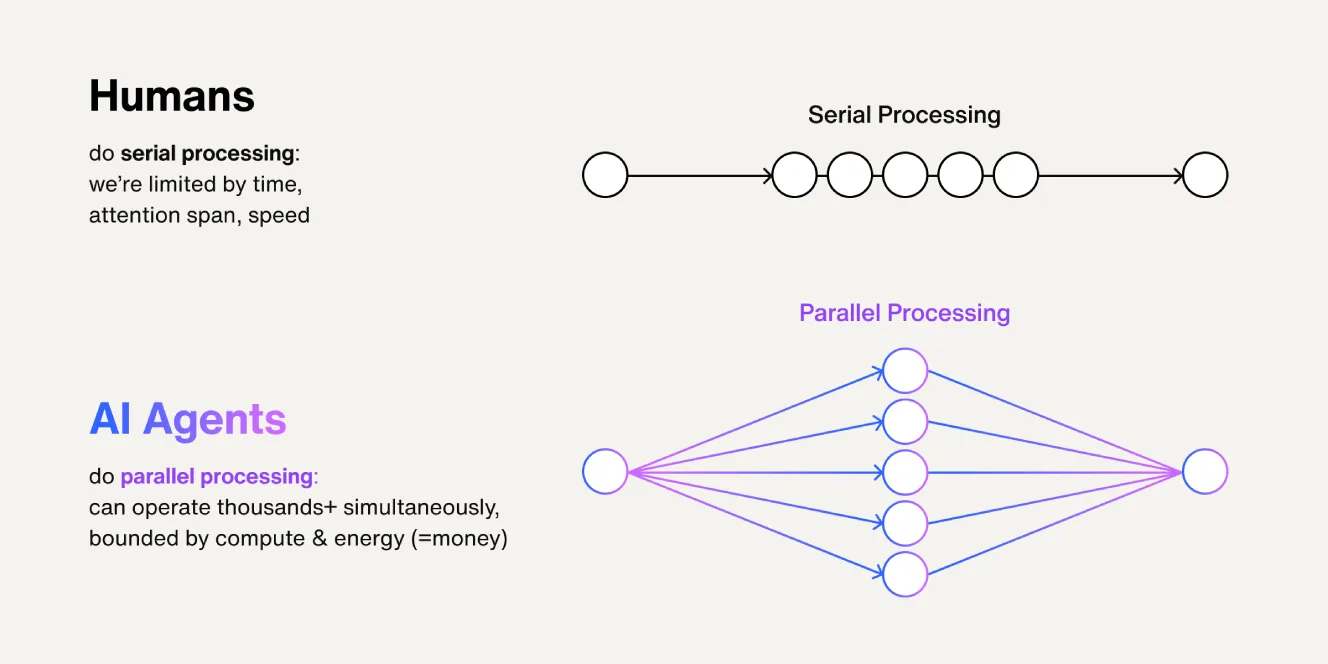
Even the most advanced agents require oversight during the transition phase. Design workflows where the agent proposes actions or drafts outputs, but a human approves final execution for critical tasks. This hybrid model builds trust and provides valuable data for fine-tuning. As the agent’s accuracy stabilizes, you can gradually reduce human intervention, moving from supervision to occasional auditing.
Traditional metrics like cost-per-query miss the value of agentic AI. Focus on outcome-based metrics: time saved per transaction, error reduction rates, and throughput increases. For example, an agent that reduces customer resolution time from 24 hours to 15 minutes provides clear value beyond simple labor cost savings. Track these metrics rigorously to justify continued investment and identify areas for further optimization.

Data sovereignty and emerging AI regulations are becoming central to deployment strategies. Ensure your agent architecture allows for data residency controls, keeping sensitive information within specific geographic or legal boundaries. Partner with providers who offer transparent audit trails and compliance certifications. This proactive approach mitigates legal risks and prepares your organization for the tightening regulatory landscape expected in 2026 and beyond.
The transition to an agent economy requires balancing innovation with stability. By following this structured approach, organizations can deploy AI agents that are not only technologically advanced but also practically viable and compliant with industry standards.
The 2026 Reality: Where AI Agent Claims Fall Short
The narrative that AI agents are a solved problem is misleading. While the agent economy is expanding, the gap between vendor promises and production stability remains wide. Fine-tuning models for vertical markets is not a plug-and-play fix; it is a rigorous engineering discipline that exposes weak data pipelines and hidden compliance risks.
The "Black Box" Reliability Gap
Most vendors market agents as autonomous problem-solvers. In vertical markets like healthcare or finance, this autonomy is a liability. Without strict guardrails, agents hallucinate regulatory requirements or misinterpret nuanced contract clauses. The cost of failure here is not just a wrong answer, but legal liability. Fine-tuning must prioritize deterministic outputs over creative language generation, often sacrificing general intelligence for sector-specific accuracy.
The Hidden Cost of Vertical Data
Fine-tuning requires high-quality, labeled data. Many organizations underestimate the effort needed to clean and structure proprietary data. The claim that "AI can learn from your docs" ignores the months of human-in-the-loop validation required. If your vertical data is fragmented or unstructured, the agent will replicate those inefficiencies at scale. The ROI is negative until the data foundation is solid.
Regulatory Blind Spots
AI agents operate in a regulatory gray area. In 2026, compliance is not optional. Agents must adhere to sector-specific rules (HIPAA, GDPR, SEC regulations) that general models do not understand. Fine-tuning for compliance is expensive and complex. Vendors who claim their agents are "compliance-ready" without providing audit trails are selling risk, not value.
The Talent Shortage
Building and maintaining vertical AI agents requires rare expertise. Data engineers, domain experts, and ML specialists are in short supply. The market is flooded with generic LLM wrappers, but few teams can build robust, fine-tuned agents for specific industries. This bottleneck limits adoption to well-funded enterprises, leaving small businesses with weak, off-the-shelf solutions.
Key Takeaways
- Reliability > Autonomy: Prioritize deterministic outputs in vertical markets.
- Data Quality is King: Garbage in, garbage out. Clean data is a prerequisite.
- Compliance is Non-Negotiable: Audit trails are essential for legal safety.
- Talent is the Bottleneck: Expertise is scarce and expensive.
No comments yet. Be the first to share your thoughts!