Why proprietary data wins in 2026
The landscape of large language models has shifted dramatically. In previous years, access to foundational models was the primary differentiator. Today, those models are commoditized. The gap between top-tier open-weight models and proprietary giants has narrowed significantly, making raw model size and parameter count a poor indicator of business value. Relying on a generic base model is no longer a strategy; it is a baseline expectation.
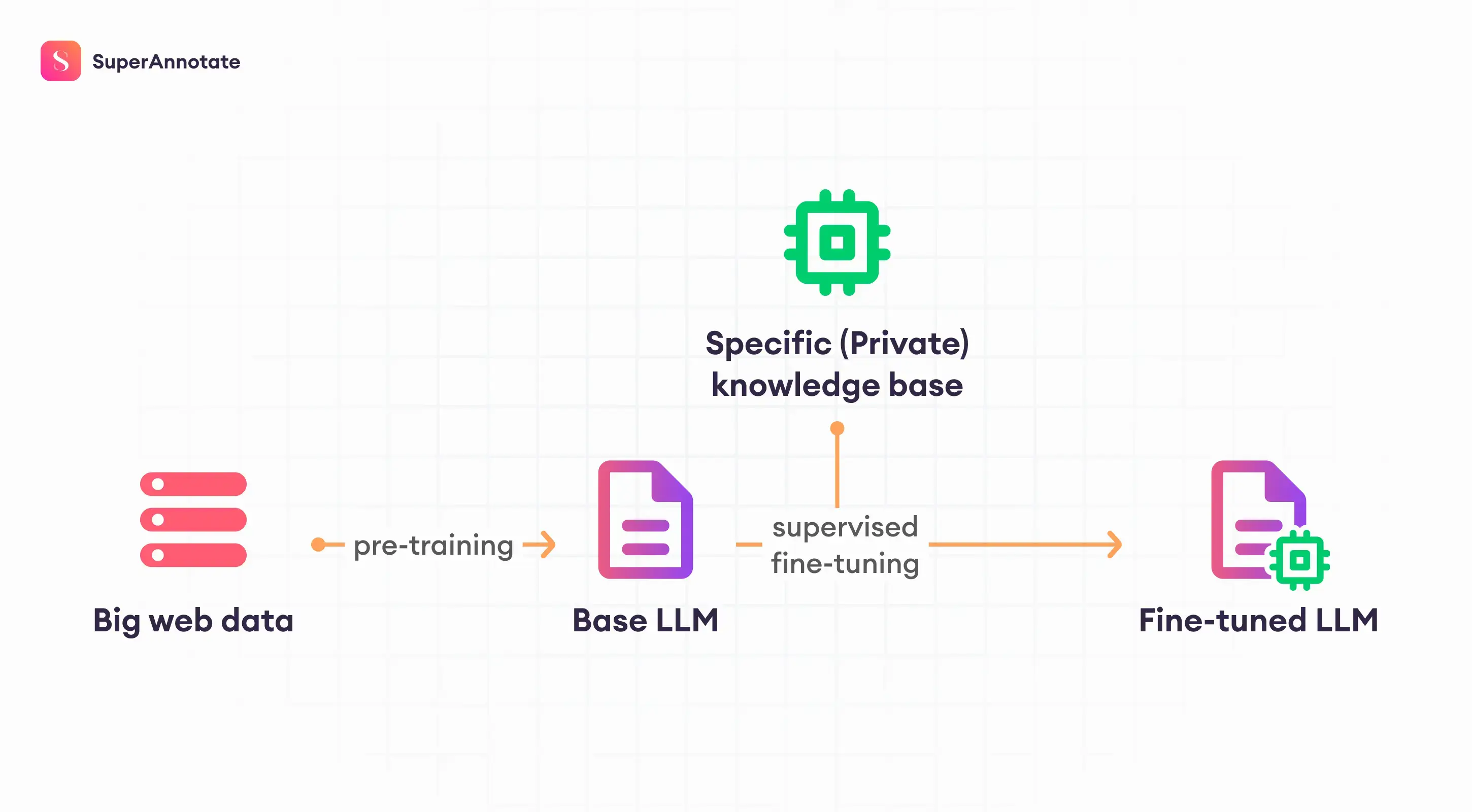
The real competitive advantage in 2026 comes from fine-tuning on proprietary data. General models are trained on broad, public internet corpora. They excel at common knowledge but often lack the nuance, accuracy, and specialized context required for specific industries. When you fine-tune a model on your internal documents, customer interactions, and domain-specific workflows, you create a defensible moat. This process transforms a generic tool into a specialized asset that competitors cannot easily replicate.
This shift is evident in how successful organizations are deploying AI. As noted in recent community discussions, local fine-tuning is becoming the biggest competitive edge in 2026. These specialized models often outperform larger general models in practical, real-world applications, even if they score lower on standardized, broad benchmarks. The value lies in precision, not breadth.
Building this advantage requires a deliberate focus on data quality. It is not enough to simply feed a model your data; you must curate, clean, and structure it. The goal is to teach the model your unique business logic, tone, and decision-making frameworks. This creates a system that understands your customers and your operations in ways that off-the-shelf solutions cannot.
When fine-tuning beats RAG and prompts
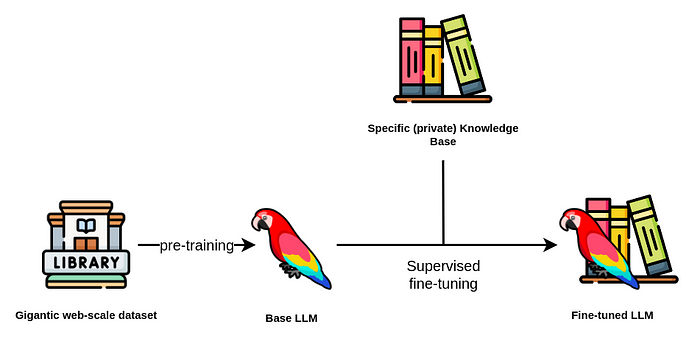
Retrieval-Augmented Generation (RAG) and fine-tuning serve different mechanical purposes. RAG retrieves external context to ground the model in current facts, while fine-tuning embeds knowledge directly into the model’s weights. The decision to fine-tune should not be a default choice; it is a specific tool for problems that retrieval cannot solve.
RAG is the superior approach when your data changes frequently. If you are building a search interface for a support ticketing system or a live news aggregator, the cost and latency of retraining a model for every new document are prohibitive. RAG keeps the knowledge base fresh and allows the model to cite sources, which is critical for accuracy in high-stakes environments.
Fine-tuning shines when you need consistent output structure or specialized domain reasoning. If your application requires the model to output strict JSON, follow a specific legal citation format, or understand niche medical terminology without extensive prompting, fine-tuning is the right path. It teaches the model how to behave, not just what to say. As noted in industry analyses, Low-Rank Adaptation (LoRA) and Quantized LoRA (QLoRA) are the standard methods for this in 2026, allowing teams to adapt general-purpose models without the prohibitive cost of full parameter updates.
Use the comparison below to decide which approach fits your data volatility and consistency needs.
| Feature | RAG | Fine-Tuning | Combined |
|---|---|---|---|
| Data Volatility | High (Live updates) | Low (Static weights) | High |
| Output Format | Variable | Strict/Consistent | Strict |
| Cost to Update | Low | High | Medium |
| Hallucination Risk | Lower (Citable) | Higher | Low |
The 2026 Fine-Tuning Tech Stack
Building a proprietary model in 2026 requires a stack that balances raw compute with memory efficiency. The foundation rests on Python 3.11+, PyTorch 2.5+, and CUDA 12.x, anchored by the Hugging Face ecosystem. Libraries like transformers, datasets, peft, and trl form the core infrastructure for loading, processing, and fine-tuning models locally or in the cloud.
Efficiency is the primary constraint. Instead of full-parameter training, the industry has shifted toward Parameter-Efficient Fine-Tuning (PEFT) techniques like QLoRA. This allows you to fine-tune massive 70B+ models on consumer-grade hardware by quantizing weights to 4-bit precision. The trade-off between model size and fine-tuning cost is stark; smaller 7B models offer speed, while larger architectures demand significant GPU memory management.
To visualize this performance and cost trade-off, consider the resource requirements across different base model sizes. The following chart illustrates the typical compute dynamics when scaling from 7B to 70B parameters.
Beyond the code, hardware selection dictates your workflow. Cloud providers like Lambda Labs and Vast.ai offer flexible access to A100 and H100 clusters, while local setups increasingly rely on Apple Silicon or high-end NVIDIA cards. The 2026 stack is not just about software; it is about orchestrating these components to extract maximum value from proprietary data without breaking the bank on compute.
LoRA and QLoRA: The efficient standard
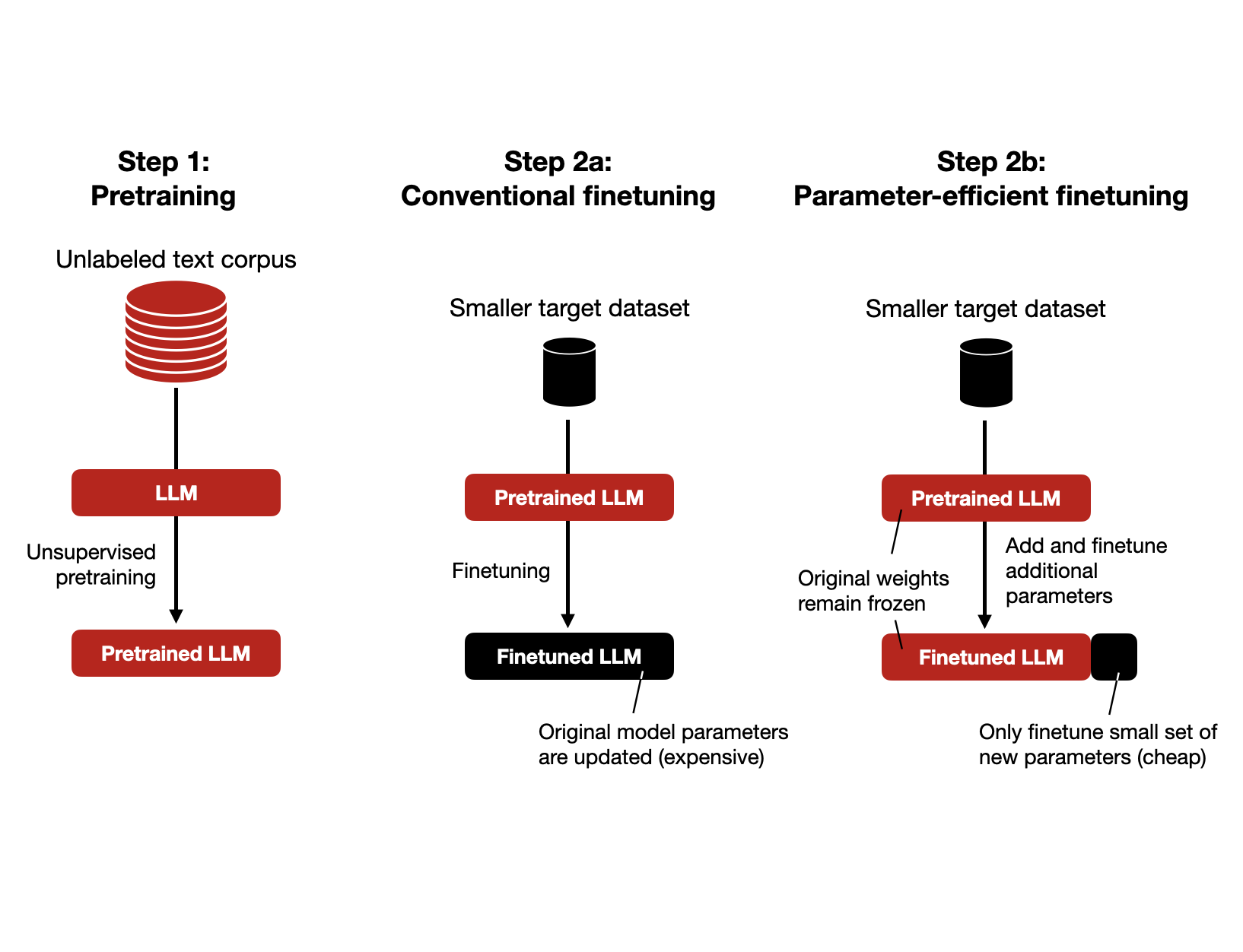
Full fine-tuning is rarely the right call for most teams in 2026. It demands massive GPU clusters, consumes enormous amounts of memory, and often fails to justify the cost against lighter alternatives. Instead, the industry has shifted toward Parameter-Efficient Fine-Tuning (PEFT) methods, with LoRA (Low-Rank Adaptation) and QLoRA (Quantized LoRA) becoming the default choice for proprietary data integration.
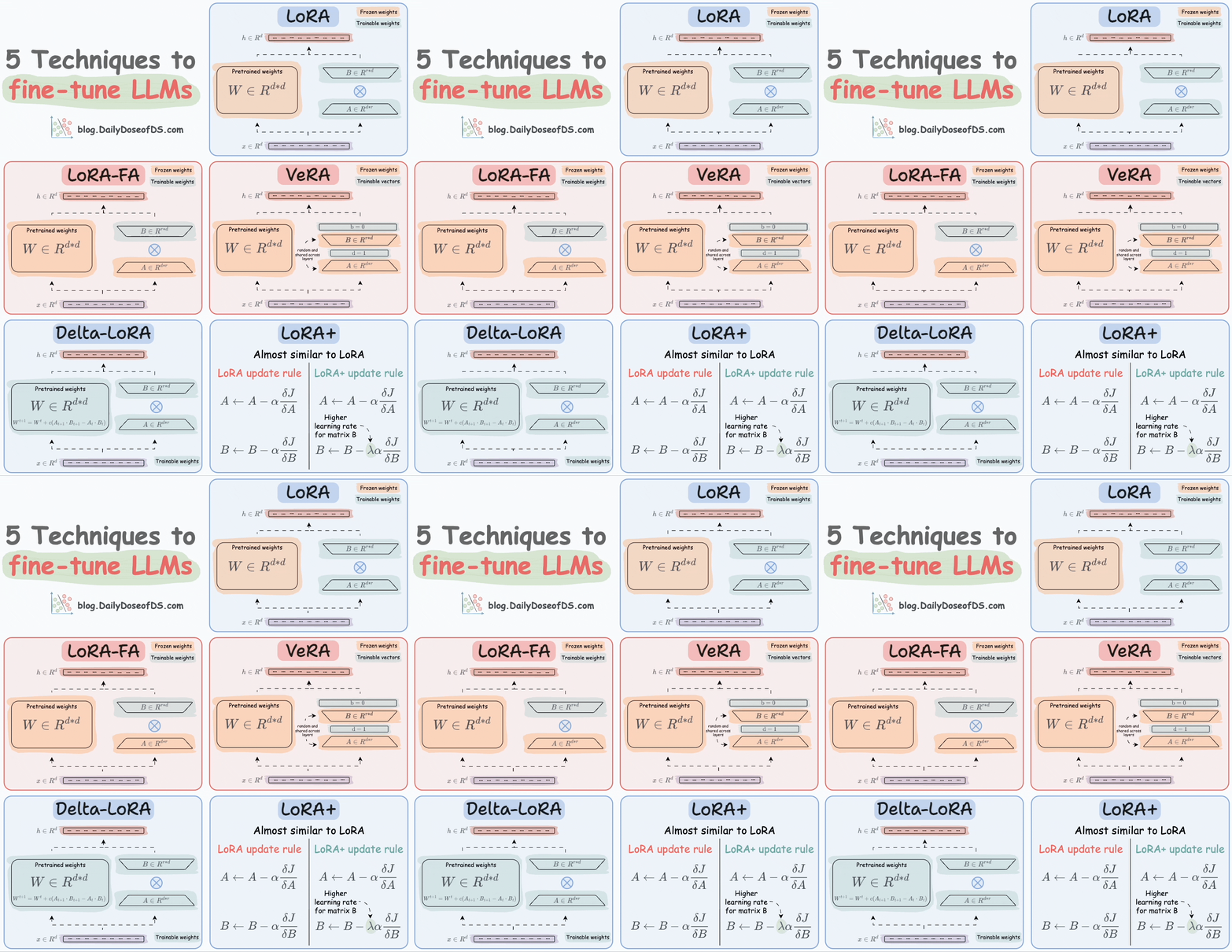
LoRA works by freezing the pre-trained model weights and injecting trainable rank decomposition matrices into each layer of the neural network. This approach drastically reduces the number of parameters that need to be updated, allowing teams to fine-tune large models on consumer-grade hardware or smaller cloud instances. The result is a significant drop in computational overhead without a noticeable sacrifice in performance.
QLoRA takes this efficiency a step further by quantizing the pre-trained model weights to 4-bit precision before applying LoRA. This allows for even greater memory savings, enabling the fine-tuning of 65B+ parameter models on a single 24GB GPU. For most proprietary data use cases—where the goal is to adapt a strong base model to specific domain knowledge rather than retrain it from scratch—QLoRA offers the best balance of cost, speed, and accuracy.
The combination of quantization and low-rank adaptation means that access to proprietary data no longer requires enterprise-grade infrastructure. Teams can now iterate faster, experiment with different data subsets, and deploy specialized models without the bottleneck of full-weight updates. This efficiency is what makes LoRA and QLoRA the practical standard for 2026.
Costs and hardware requirements
Fine-tuning a 7B parameter model in 2026 no longer requires an enterprise data center or a six-figure budget. With optimized quantization techniques and accessible cloud GPU providers, the marginal cost of training a specialized model has dropped dramatically. You can now fine-tune a capable 7B model for under $5 using cloud spot instances, provided you select the right hardware and efficiency settings.
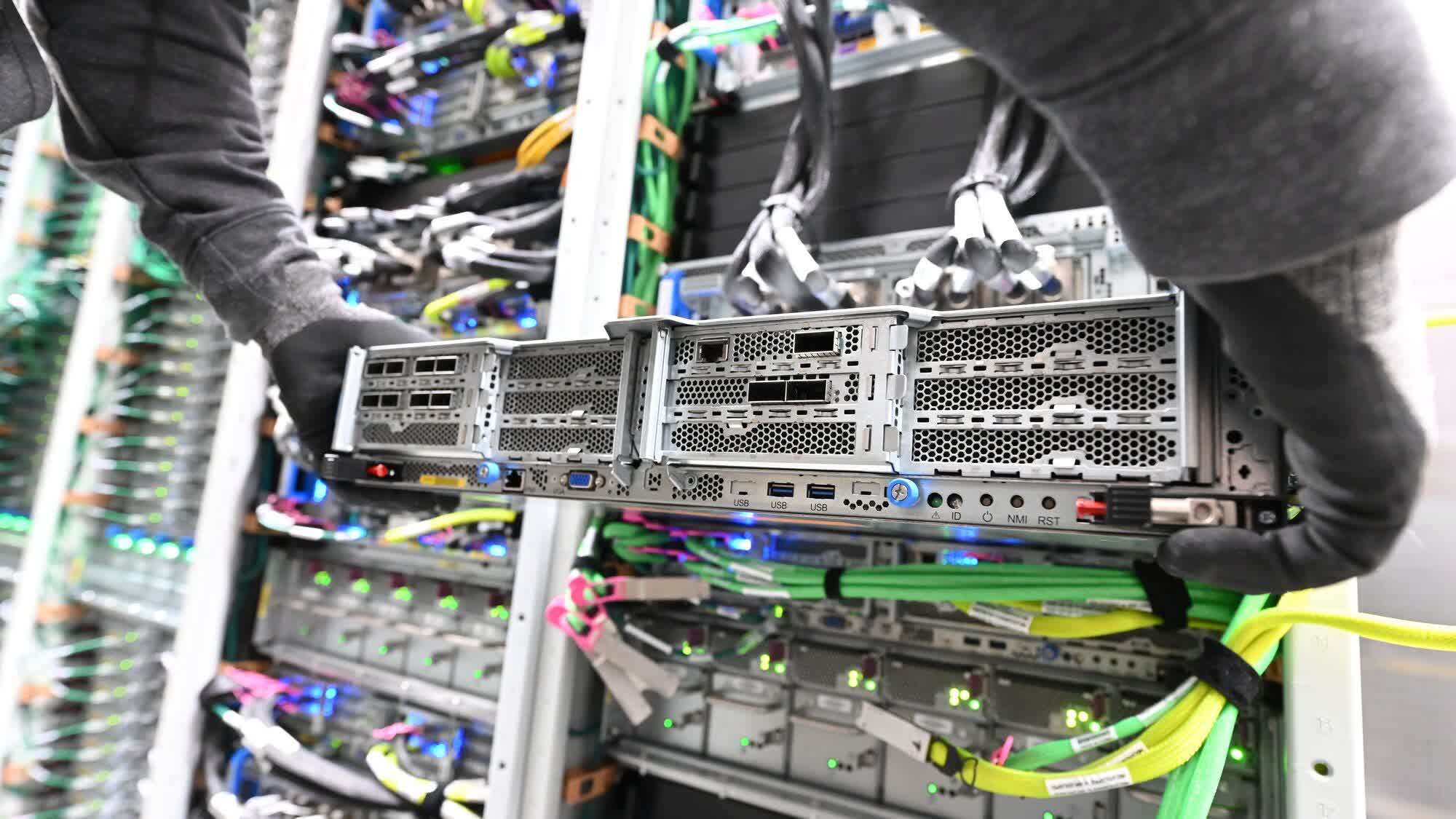
The hardware requirement is surprisingly modest. A single consumer-grade GPU with 16GB of VRAM, such as an RTX 3090 or 4090, can handle 4-bit quantized fine-tuning of 7B models using frameworks like Unsloth or Axolotl. For cloud compute, a single A10G or L4 instance from providers like RunPod, Lambda Labs, or Vast.ai is sufficient for most 7B workloads. This shifts the paradigm from "buying a cluster" to "renting a single chip for a few hours."
To understand the current market pricing for these resources, you can track live GPU spot rates below. Cloud GPU prices fluctuate based on demand and region, so using spot instances is the most cost-effective strategy for non-urgent training jobs.
While consumer hardware is cheaper, cloud GPUs offer reliability and speed. A typical fine-tuning run for 1,000 examples on a 7B model takes 30–60 minutes on an A10G. At current spot rates, this translates to roughly $0.50–$1.50 in compute costs. The remaining expense usually comes from data preparation and storage, which are negligible compared to traditional training runs. The key is to keep your dataset small and focused; fine-tuning is about quality, not quantity.
Top platforms for fine-tuning in 2026
Choosing the right infrastructure depends on your balance between ease-of-use and technical control. The landscape has consolidated around five primary contenders that dominate the 2026 market for LLM fine-tuning. Each platform serves a distinct operational profile, from managed cloud services to open-source frameworks.
SiliconFlow
SiliconFlow offers a streamlined API-first approach for developers who want to avoid infrastructure management. It excels in rapid iteration for smaller models, providing a clean interface for dataset upload and automated training pipelines. This platform is ideal for teams prioritizing speed over granular hardware control.
Hugging Face
Hugging Face remains the central hub for the open-source community. Its platform integrates seamlessly with the vast model repository, allowing users to fine-tune and deploy models within a single environment. The ecosystem supports a wide variety of architectures, making it the default choice for researchers and engineers who need flexibility.
Firework AI
Firework AI focuses on high-performance inference and fine-tuning for large language models. It is particularly strong for enterprises that require low-latency responses and scalable GPU clusters. The platform handles the complexity of distributed training, allowing teams to focus on model performance rather than cluster management.
Axolotl
Axolotl is a command-line tool designed for maximum control and efficiency. It supports a wide range of fine-tuning techniques, including LoRA and QLoRA, and is optimized for various hardware configurations. This platform is best suited for engineers who need to tweak every parameter and understand the underlying training dynamics.
LLaMA-Factory
LLaMA-Factory provides a comprehensive web UI for fine-tuning, making complex processes accessible without extensive coding. It supports multiple models and training strategies, offering a visual way to manage datasets and hyperparameters. This tool is excellent for teams that want the power of open-source fine-tuning with a more user-friendly interface.


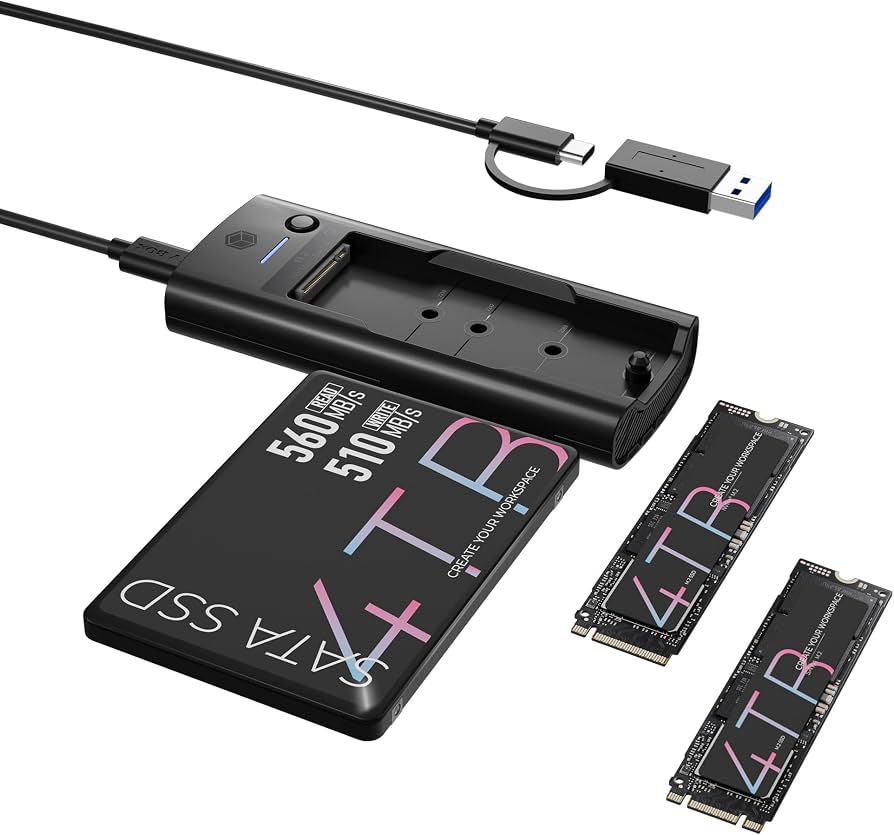
As an Amazon Associate, we may earn from qualifying purchases.
LLM Fine-Tuning 2026: The Proprietary Data Playbook
Build a Fine-Tuning Checklist
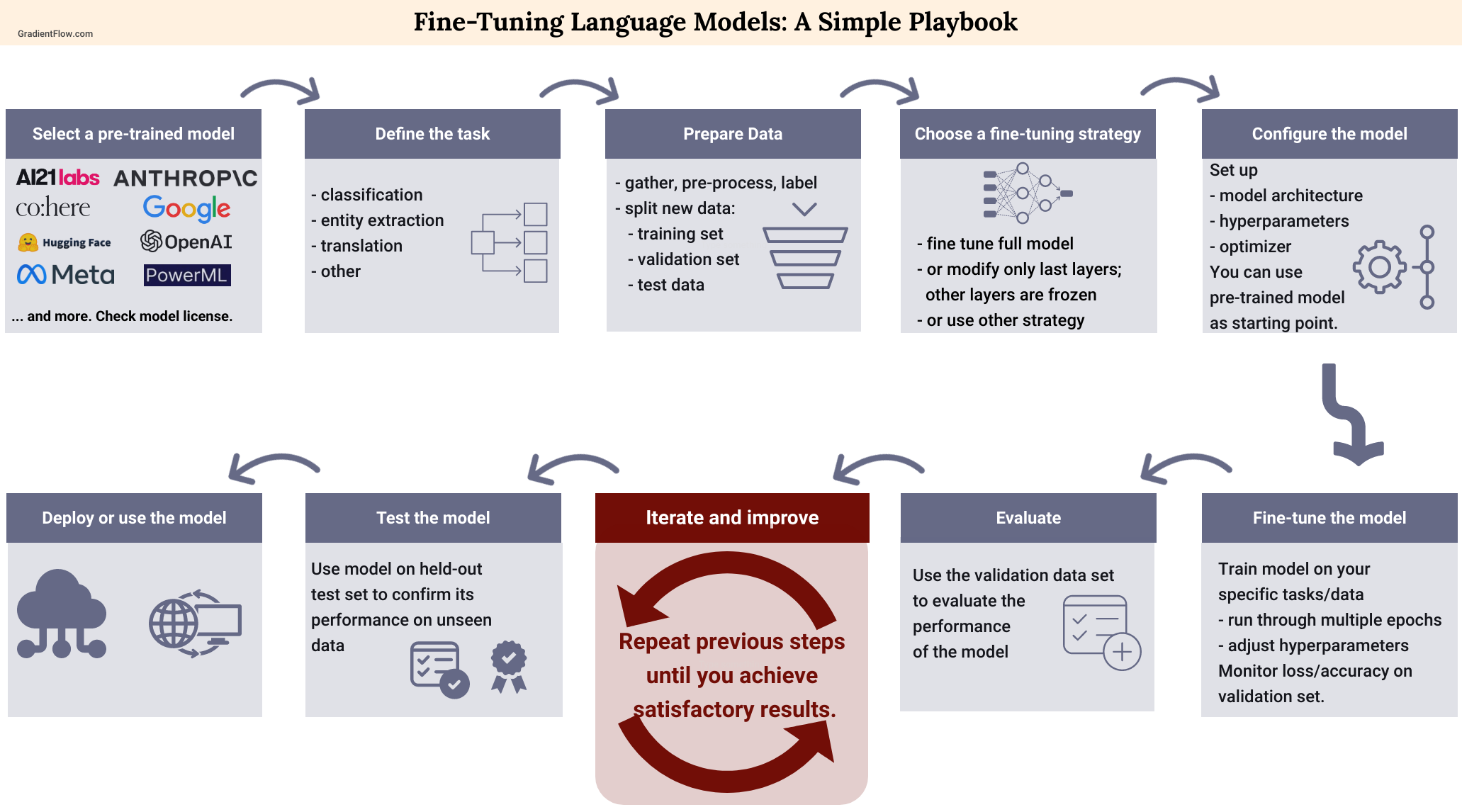
Before committing compute to a fine-tuning run, validate your project’s readiness. A structured checklist prevents wasted cycles and ensures your proprietary data actually drives performance gains.
Pinpoint the specific problem your proprietary data solves. Vague goals lead to vague models. Ensure the task cannot be handled by prompt engineering alone.
Your proprietary data must be clean, labeled, and representative. Check for bias, duplicates, and formatting errors. Garbage in, garbage out.
Choose a foundation model with the right architecture and parameter size. Larger isn't always better; match the model's capabilities to your task complexity.
Decide between full fine-tuning, LoRA, or QLoRA. Consider your budget and latency requirements. Efficient methods often deliver near-parity with full tuning.
Define success before you start. Use hold-out test sets from your proprietary data to measure accuracy, latency, and cost. Track these metrics rigorously.
A disciplined checklist turns speculative fine-tuning into a reliable engineering process. Start with clear goals, validate your data, and measure everything.
No comments yet. Be the first to share your thoughts!