Why local fine-tuning wins in 2026
The fine-tuning market 2026 landscape has shifted decisively away from cloud-only API usage. Where training custom models once required enterprise budgets and opaque vendor lock-in, local adaptation now offers precise control over data privacy and operational costs. This transition is driven by the maturity of consumer-grade hardware capable of handling complex parameter updates without relying on external servers.
Cost efficiency is the primary driver of this migration. Fine-tuning a 7B parameter model, a standard benchmark for capable local assistants, now costs under $5 when executed on local hardware. This represents a dramatic drop from the hundreds of dollars per run typical in 2024, making iterative experimentation accessible to individual developers and small teams alike. The economic barrier to entry has effectively collapsed.
Privacy concerns further cement the value of local setups. By keeping sensitive data within your own infrastructure, you eliminate the risk of third-party exposure inherent in cloud-based training pipelines. This is particularly critical for businesses handling proprietary information or regulated data, where local fine-tuning ensures compliance without sacrificing model capability.
The competitive advantage lies in speed and iteration. Local hardware allows for rapid testing of different architectures and datasets without network latency or queue times. As the fine-tuning market 2026 continues to evolve, the ability to quickly adapt models to specific niches becomes a decisive factor in maintaining relevance and performance.
Top GPUs for enterprise AI adaptation
The 2026 fine-tuning market demands hardware that balances raw compute with memory bandwidth. For enterprise adaptation, the bottleneck is rarely pure floating-point operations; it is VRAM capacity and the ability to load large context windows without swapping to system RAM. We have selected concrete GPU models that dominate current benchmarks for LLM adaptation, categorized by their primary use case in the development lifecycle.
High-End Workstation: NVIDIA RTX 6000 Ada Generation
The RTX 6000 Ada is the current gold standard for single-GPU enterprise fine-tuning. With 48GB of GDDR6 ECC memory, it allows developers to fine-tune 7B and 13B parameter models using QLoRA (Quantized Low-Rank Adaptation) with significant batch sizes. This card eliminates the need for multi-GPU NVLink setups for most mid-sized models, simplifying the software stack and reducing power consumption. It is the preferred choice for teams running continuous integration pipelines for model adaptation.
Multi-GPU Cluster: NVIDIA H100 80GB
For large language models exceeding 30 billion parameters, single-GPU solutions hit a hard wall. The H100 80GB is the industry workhorse for distributed training. Its HBM3 memory bandwidth (3.35 TB/s) allows for rapid data ingestion during the pre-training and fine-tuning phases. While expensive, its efficiency in reducing training time from weeks to days makes it essential for enterprises deploying custom models at scale. It supports the latest CUDA 12.x features required for PyTorch 2.5+ performance gains.
Cost-Effective Entry: NVIDIA RTX 4090 24GB
Not every enterprise adaptation requires a data center. The RTX 4090, with 24GB of VRAM, remains the most popular choice for small teams and individual developers. It handles 7B models comfortably with full precision or 4-bit quantization. While it lacks ECC memory, its consumer-grade price point offers the best performance-per-dollar for prototyping and small-scale fine-tuning. Many 2026 workflows start on this hardware before scaling to H100 clusters.
Alternative Architecture: AMD Instinct MI300X
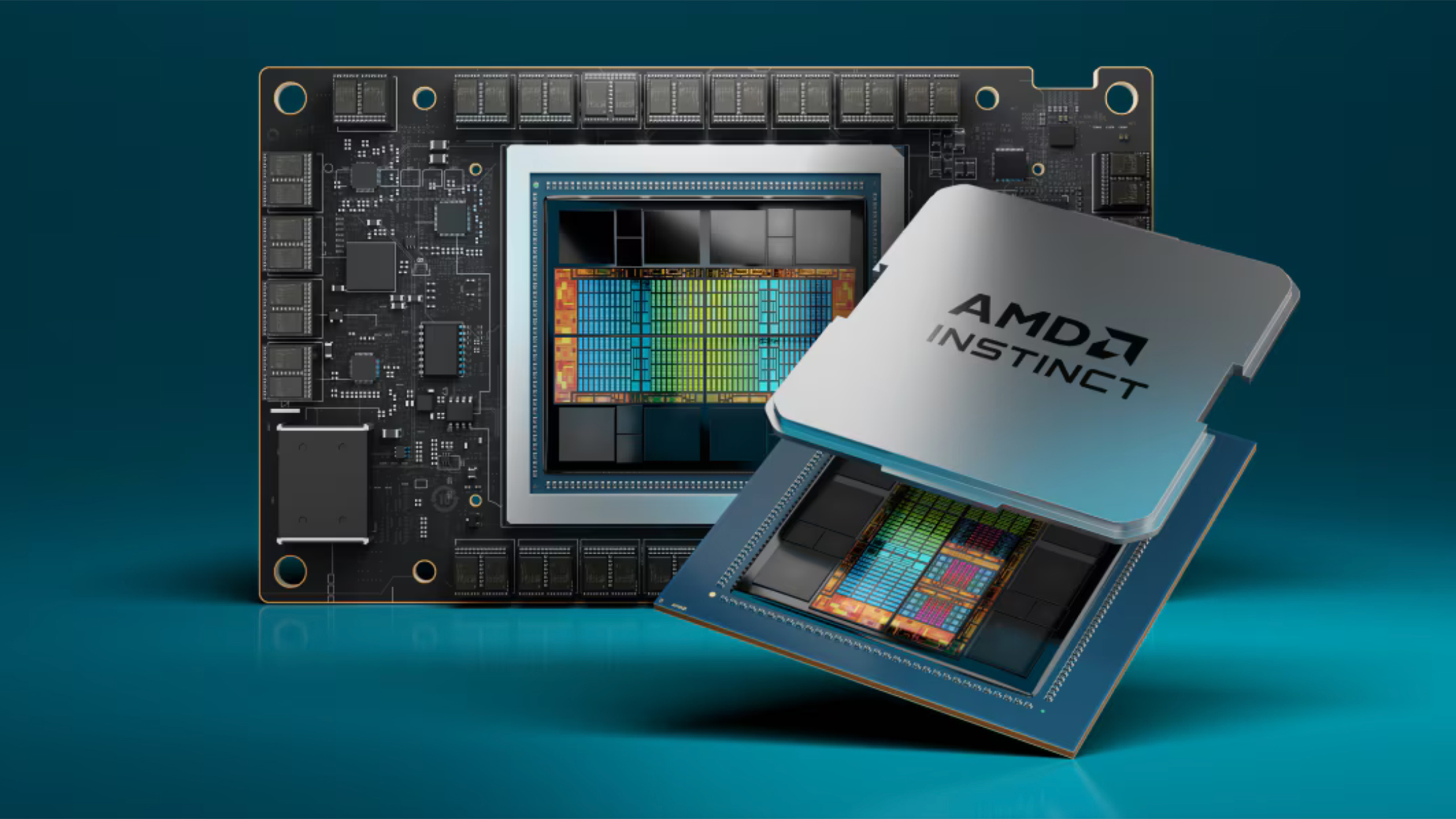
AMD’s MI300X offers 192GB of HBM3 memory in a single chip, providing massive capacity for loading extremely large models without quantization. This is particularly useful for researchers who need to preserve model fidelity during adaptation. While software support via ROCm is improving, it still requires more configuration effort than NVIDIA’s CUDA ecosystem. It is a strong contender for enterprises already invested in AMD infrastructure or those prioritizing memory capacity over raw CUDA compatibility.


As an Amazon Associate, we may earn from qualifying purchases.
Comparing fine-tuning stacks and costs
The 2026 fine-tuning market relies on a specific software foundation: Python 3.11+, PyTorch 2.5+, CUDA 12.x, and the Hugging Face ecosystem (transformers, datasets, peft, trl). Hardware selection is less about raw speed and more about VRAM capacity, which dictates whether you can run QLoRA, full fine-tuning, or Reinforcement Fine-Tuning (RFT) with GRPO.
The following comparison breaks down the primary hardware tiers used for local LLM adaptation. Each option targets a different segment of the fine-tuning market 2026 landscape, balancing memory constraints against cost.
Single-GPU Efficiency
For most developers, the NVIDIA RTX 4090 remains the entry point for the fine-tuning market 2026. Its 24 GB of VRAM allows for efficient QLoRA fine-tuning of models up to 13 billion parameters. This setup fits on a standard desktop workstation, keeping hardware costs low while leveraging the latest CUDA 12.x optimizations for fast gradient updates.
Mid-Range Professional Workstations
When working with 13B to 34B parameter models, consumer cards often run out of memory. The NVIDIA RTX 6000 Ada provides 48 GB of VRAM, enabling larger batch sizes and more stable training loops. It bridges the gap between consumer gaming cards and enterprise data center hardware, making it a popular choice for small teams building custom domain-specific models.
Enterprise Scale and RFT
Reinforcement Fine-Tuning (RFT) with algorithms like GRPO requires significant memory overhead for reward modeling and policy gradients. The NVIDIA H100 80GB is the standard for this tier. While expensive, its HBM3 memory bandwidth drastically reduces training time for large language models, making it essential for organizations that need to iterate quickly on massive parameter counts.
Measuring ROI in the fine-tuning market 2026
Calculating the return on investment for model adaptation requires comparing the upfront cost of compute and data preparation against the long-term reduction in API spend. In the fine-tuning market 2026, the primary financial driver is shifting from paying per-token for general-purpose models to owning a specialized model that handles enterprise tasks with higher accuracy and lower latency.
Reduced API Costs
Every time your application calls a general-purpose API for a specialized task, you pay a premium. Fine-tuning eliminates this recurring variable cost. By adapting a base model to your specific domain, you reduce the number of tokens required per response and minimize the need for complex prompt engineering or re-tries. For high-volume applications, this shift from operational expenditure (OpEx) to capital expenditure (CapEx) on hardware or cloud GPU instances significantly lowers the total cost of ownership.
Improved Model Accuracy
Accuracy is the second pillar of ROI. General models often hallucinate or provide generic answers when faced with niche enterprise queries. A fine-tuned model, trained on your internal documentation and historical data, provides precise, context-aware responses. This reduces the human-in-the-loop review time, allowing your team to focus on complex exceptions rather than routine corrections. The value here is measured in hours saved and error rates reduced, which directly impacts customer satisfaction and operational efficiency.
Concrete Hardware Considerations
To realize these ROI gains, you need hardware that balances performance with cost. The NVIDIA RTX 4090 offers a strong entry point for smaller models, providing sufficient VRAM for 7B-13B parameter models without the enterprise price tag of data center GPUs. For larger models or faster inference, the NVIDIA A100 or H100 clusters provide the necessary throughput, though they require significant infrastructure investment. Choose hardware that aligns with your model size to avoid over-provisioning, which can erode your projected savings.
Checklist for choosing fine-tuning hardware
Before committing to a purchase, verify that your hardware aligns with the requirements of the 2026 fine-tuning market. The current stack demands specific memory capacities and software compatibility to ensure your local LLM adaptation runs efficiently.
Ensure your GPU has at least 24GB of VRAM for 7B-13B parameter models. Lower-end cards will bottleneck training speed or prevent loading larger model weights entirely.
The 2026 fine-tuning stack centers on Python 3.11+, PyTorch 2.5+, and CUDA 12.x. Older GPUs lacking proper driver support for CUDA 12 will face compatibility issues with the Hugging Face ecosystem.
Fine-tuning runs for hours or days. Verify your case airflow and GPU cooling solutions can sustain high loads without thermal throttling, which degrades training stability.


As an Amazon Associate, we may earn from qualifying purchases.
FAQs on local LLM fine-tuning
The fine-tuning market 2026 has shifted from enterprise-only cloud budgets to accessible local hardware. You no longer need a data center to adapt models for specific tasks.
How much does it cost to fine-tune a model?
Running a fine-tune on a 7B parameter model costs under $5 in 2026 when using efficient methods like QLoRA. This low barrier allows individuals and small teams to experiment without significant financial risk.
What VRAM do I need for local fine-tuning?
Hardware requirements depend on model size and technique. For a 7B model using QLoRA, 8GB of VRAM is often sufficient. However, full fine-tuning or larger 13B+ models typically require 16GB to 24GB of VRAM to handle the context and weights comfortably.
Is local fine-tuning worth the effort in 2026?
Yes. Local fine-tuning is becoming the biggest competitive edge for developers who need specialized knowledge. Tools like TRL (Transformer Reinforcement Learning) make the process straightforward, allowing you to outperform generic models in niche applications.
No comments yet. Be the first to share your thoughts!