Why local fine-tuning wins in 2026
The enterprise AI strategy has shifted. While cloud API calls remain useful for general tasks, local fine-tuning is now the primary driver for ROI and data privacy. Running open-source models on-premises or in private clouds eliminates recurring token fees and keeps sensitive data within your firewall.
The cost barrier has collapsed. Fine-tuning a 7B model now costs under $5 on cloud GPUs, compared to the recurring expenses of API usage for high-volume enterprise workloads. This shift makes local adaptation economically superior for most specialized business use cases.
Cost Comparison: Fine-tuning a 7B model can cost under $5 on cloud GPUs vs. recurring API fees.
This accessibility has transformed local fine-tuning from a research-lab skill into a standard engineering practice. Companies can now adapt models like Llama or Qwen to their specific domain without relying on third-party vendors, ensuring both performance and compliance.
Best all-in-one fine-tuning platforms
For enterprises that lack the infrastructure to manage the 2026 fine-tuning stack from scratch, managed platforms offer a critical shortcut. Instead of wrestling with Python 3.11+, PyTorch 2.5+, and CUDA 12.x dependencies, teams can leverage unified interfaces that handle the heavy lifting. These platforms simplify the journey from raw data to a deployed model, reducing the risk of deployment failures.
SiliconFlow, Hugging Face, and Firework AI stand out as the leading options for 2026. SiliconFlow provides a streamlined API-first approach, ideal for teams prioritizing speed. Hugging Face remains the community standard, offering unparalleled access to open-source model families. Firework AI focuses on inference optimization, ensuring that fine-tuned models perform efficiently in production environments.
Choosing the right platform depends on your specific constraints. If you need rapid iteration with minimal setup, SiliconFlow is a strong candidate. For those who value ecosystem breadth and community support, Hugging Face is the default choice. If inference latency is your primary concern, Firework AI’s specialized infrastructure may be the better fit.
| Platform | Ease of Use | GPU Access | Supported Models |
|---|---|---|---|
| SiliconFlow | High | Managed | Llama, Qwen, DeepSeek |
| Hugging Face | Medium | Flexible (SageMaker/Local) | Llama, Qwen, Mistral, BERT |
| Firework AI | Medium | Managed (Inference-focused) | Llama, Qwen, Gemma |
Before committing to a platform, verify that it supports the specific model families you intend to fine-tune. While Llama and Qwen are widely supported, niche models may require more flexible infrastructure. Additionally, consider the long-term costs of GPU access; managed services often simplify billing but can become expensive at scale.
Open-source tools for custom workflows
For engineering teams that need granular control over the fine-tuning pipeline, open-source libraries are the standard. Unlike managed platforms that abstract away the infrastructure, these tools give you direct access to the training loop, allowing you to optimize for specific hardware constraints and data formats.
Axolotl
Axolotl is a command-line interface built on top of Hugging Face Transformers. It is designed for reproducibility and ease of use, allowing teams to define their entire fine-tuning configuration in a single YAML file. This approach reduces the boilerplate code often required to set up distributed training environments.
The library supports a wide range of models, including LLaMA, Mistral, and Gemma. It integrates seamlessly with popular parameter-efficient fine-tuning (PEFT) methods like LoRA and QLoRA, which are essential for fine-tuning large models on consumer-grade GPUs. By handling the complexity of mixed-precision training and gradient accumulation, Axolotl lets engineers focus on data quality rather than infrastructure management.
LLaMA-Factory
LLaMA-Factory is a unified framework that supports the fine-tuning of over 100 LLMs. It stands out for its user-friendly interface, offering both a web UI and a command-line tool. This flexibility allows teams to experiment with different models and hyperparameters without writing custom training scripts.
The platform supports various fine-tuning techniques, including full-parameter fine-tuning, LoRA, and QLoRA. It also provides built-in support for multi-modal models, making it a versatile choice for teams working on vision-language tasks. LLaMA-Factory’s emphasis on ease of use and broad model compatibility makes it a strong candidate for enterprises looking to standardize their fine-tuning workflows across diverse model families.
Hardware and GPU requirements
Local fine-tuning has shifted from a data-center-only exercise to something feasible on a single workstation. The 2026 stack centers on Python 3.11+, PyTorch 2.5+, and CUDA 12.x, allowing teams to run efficient workflows using tools from the Hugging Face ecosystem like PEFT and TRL. This shift means you no longer need a cluster to experiment with Llama, Qwen, or DeepSeek models.
The primary constraint is always video memory (VRAM). For a 7B parameter model, you typically need between 8GB and 16GB of VRAM depending on the quantization level and whether you are using full fine-tuning or parameter-efficient methods like LoRA. Higher-end 13B models generally require 24GB or more to run smoothly without out-of-memory errors.
Consumer GPUs for 7B–13B Models
You can fine-tune 7B models on consumer-grade hardware like the NVIDIA RTX 3090 or 4090. These cards offer 24GB of VRAM, which is sufficient for most 7B and small 13B model adjustments. This accessibility has driven costs down significantly; fine-tuning a 7B model locally can now cost under $5 in electricity and time, compared to hundreds of dollars in cloud compute fees.
For 13B models, the RTX 4090 remains the entry point, but you may need to use 4-bit or 8-bit quantization to fit the model and training overhead into memory. If you plan to fine-tune larger 30B+ models locally, you will likely need multiple GPUs in a NVLink configuration or a server with A100/H100 accelerators, which pushes the hardware requirement back into the enterprise realm.
Cloud Alternatives
If your local hardware lacks the necessary VRAM, cloud platforms offer a flexible alternative. Services like RunPod, Lambda Labs, and Vast.ai provide access to high-end GPUs by the hour. This pay-as-you-go model is ideal for sporadic fine-tuning tasks, allowing you to spin up an A100 for a few hours and then shut it down, avoiding the capital expenditure of buying enterprise hardware.
Where to buy fine-tuning hardware
Enterprise teams building local models need reliable compute. The best LLM fine-tuning platforms start with the right GPUs and workstations. You can buy dedicated hardware directly or rent cloud instances. This section focuses on concrete products available for immediate purchase.
NVIDIA RTX 4090
The NVIDIA RTX 4090 remains the standard for single-GPU fine-tuning. Its 24 GB of VRAM handles 7B and 13B models efficiently. Many enterprises start here for development before scaling to clusters.
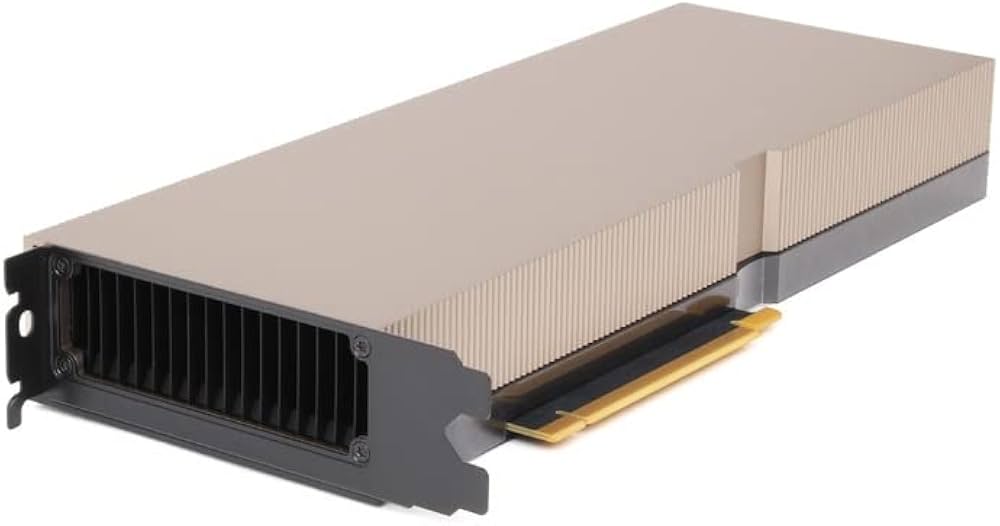
NVIDIA A100 80GB
For larger models, the NVIDIA A100 80GB provides the memory bandwidth needed for 70B parameter models. It is the industry workhorse for serious fine-tuning tasks. You will find these in most enterprise data centers.
Dell Precision Workstations
Dell Precision workstations offer a pre-built alternative. They come with enterprise-grade support and certified drivers. This reduces the IT overhead of assembling custom racks.


As an Amazon Associate, we may earn from qualifying purchases.
FAQ: LLM fine-tuning costs and methods
How much does enterprise fine-tuning cost?
The price of fine-tuning has dropped significantly. According to recent 2026 data, training a 7B parameter model can cost under $5 when using cloud spot instances or efficient open-source stacks like Spheron. However, enterprise budgets must account for data preparation, which often exceeds compute costs. For large-scale deployments, expect to pay $100-$500 per day for dedicated GPU clusters if you require low-latency inference alongside training.
When should I use LoRA versus full SFT?
Low-Rank Adaptation (LoRA) is the standard for enterprise efficiency. As Databricks notes, LoRA allows you to fine-tune large models by training only a small fraction of parameters, reducing memory usage by up to 90% compared to full Supervised Fine-Tuning (SFT). Use LoRA when you need to iterate quickly or manage multiple domain-specific adapters. Reserve full SFT only when the model’s base knowledge is fundamentally misaligned with your enterprise’s strict compliance or reasoning requirements.
Is local fine-tuning more secure than cloud platforms?
Local fine-tuning keeps your proprietary data on-premises, eliminating third-party data exposure risks. While cloud platforms like AWS Bedrock or Azure AI offer convenience, they may retain data for model improvement unless you sign specific Data Processing Agreements. For regulated industries like finance or healthcare, local deployment via tools like Hugging Face Transformers on private servers provides the necessary audit trails and data sovereignty.
No comments yet. Be the first to share your thoughts!