
Get AI agents 2026 right
Before you commit budget to autonomous commerce, verify your foundation. The agents dominating 2026—OpenAI Operator, Google Gemini, Anthropic Claude, and Microsoft Copilot—rely on clean data and clear boundaries. If your infrastructure is messy, the agents will be too.
Start by auditing your data pipeline. Autonomous agents need structured, accessible information to execute tasks without human intervention. Clean, tagged, and real-time data reduces hallucination risks and ensures accurate decision-making. Test retrieval accuracy before scaling.
Next, define strict guardrails. Agents should operate within predefined scopes to prevent scope creep or unauthorized actions. Set up permission layers and approval workflows for high-stakes decisions. This keeps autonomy in check while maintaining operational efficiency.
Finally, choose the right agent for your use case. Not all agents are equal. Coding tasks favor Claude Code or Devin, while business automation may suit Agentforce. Align the agent’s strengths with your specific workflow to avoid friction and maximize ROI.
How to Fine-Tune Market Strategies for Autonomous Commerce
Deploying AI agents requires a shift from manual oversight to structured orchestration. You cannot simply turn on an autonomous agent and expect it to understand your brand voice or compliance boundaries. You must build the guardrails first.
This section walks through the practical steps to configure, test, and launch an AI agent for market strategy. These steps apply whether you are using OpenAI Operator, Google Gemini, or specialized tools like Agentforce. The goal is to ensure your agent acts as a precise extension of your team, not a wild card.

Before writing a single prompt, map the boundaries. Autonomous agents fail when they are given too much latitude. Define exactly what the agent can do (e.g., draft email responses, update CRM data) and what it must never do (e.g., approve discounts over 10%, contact legal counsel).
Create a clear "scope document" that lists permitted actions, forbidden actions, and the specific data sources the agent is allowed to access. This prevents hallucination-driven errors and keeps the agent within your brand’s risk tolerance.

Your system prompt is the agent’s brain. It needs to be explicit about tone, format, and decision logic. Avoid vague instructions like "be helpful." Instead, use concrete directives: "Respond in a professional but conversational tone. Always cite the source data. If the customer asks for a refund, check the order history first."
Include few-shot examples in the prompt to show the agent exactly how you want complex tasks handled. This reduces variability and ensures consistent output across different scenarios. Test different prompt variations to see which yields the most accurate results.
An agent is only as useful as the data it can access. Connect your agent to your CRM, email platform, and analytics tools using secure APIs. Ensure the integration allows the agent to read necessary context and write actions (like sending an email) only when explicitly authorized.
Use role-based access control (RBAC) to limit what the agent can modify. For example, give the agent read-only access to customer data but write access only to the email sending queue. This minimizes the risk of accidental data corruption.

Never launch an agent into the live market without rigorous testing. Create a sandbox environment where you can feed the agent real-world scenarios without affecting actual customers. Test edge cases, such as angry customers, ambiguous requests, and technical errors.
Track the agent’s performance metrics: accuracy, response time, and user satisfaction. If the agent makes a mistake, analyze why it happened and adjust the prompt or constraints accordingly. Repeat this cycle until the agent performs reliably.
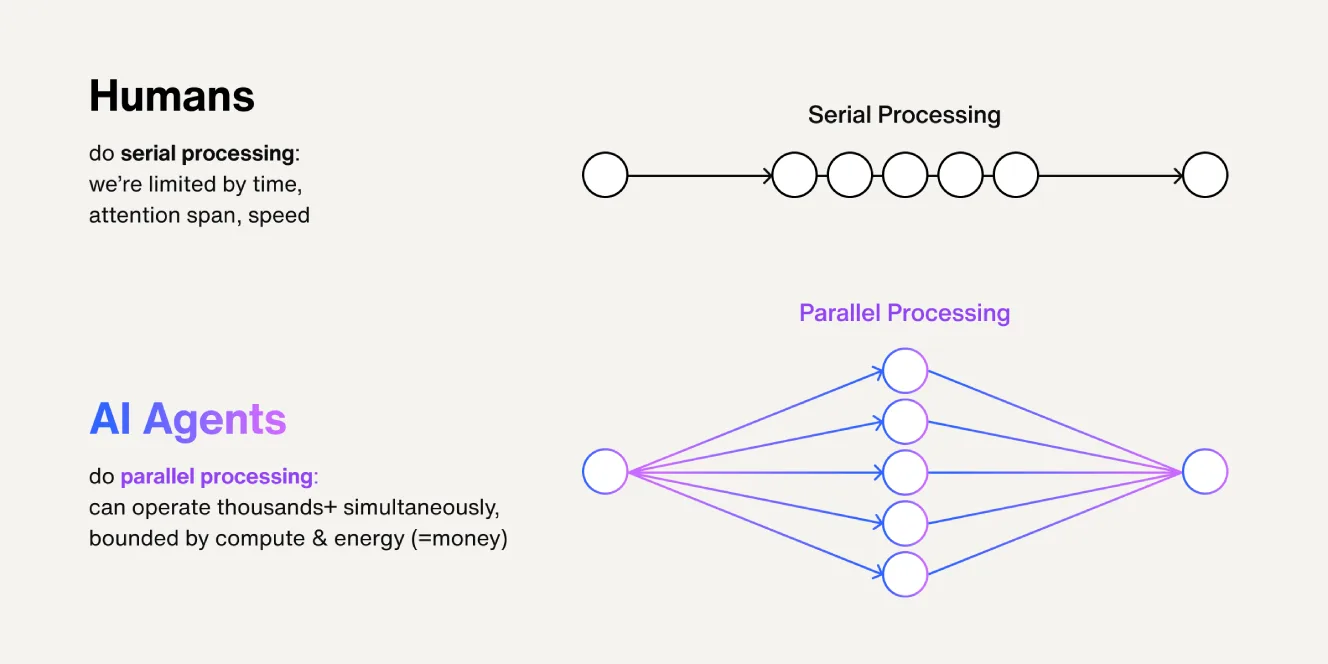
Autonomous agents require ongoing supervision. Set up dashboards to monitor key performance indicators (KPIs) like conversion rates, customer satisfaction scores, and error rates. Use AI-driven analytics to identify patterns in the agent’s behavior.
Schedule regular reviews to update the agent’s knowledge base and refine its prompts. The market changes, and your agent needs to adapt. Treat the agent as a living system that requires constant tuning to remain effective and compliant.
Common Mistakes in AI Agent Deployment
Autonomous commerce moves fast, but many teams stumble on the same pitfalls. These errors don't just slow down deployment; they break trust with customers and drain budgets. Fixing them requires shifting from a "chatbot mindset" to an "operator mindset."
Over-Reliance on Single-Provider Models
Many strategies lock into one vendor’s ecosystem, assuming their default agents are ready for production. This is risky. As seen with OpenAI Operator and Google Gemini, default models often lack the specific context needed for complex, multi-step commerce tasks. They may hallucinate inventory data or misinterpret nuanced customer intent. Instead of treating a single provider as the final answer, use them as one layer in a broader orchestration strategy. Verify their outputs against your own internal data sources before letting them execute transactions.
Ignoring Human-in-the-Loop Guardrails
Autonomous agents can make irreversible mistakes if left unchecked. A common error is deploying agents with full write-access to your CRM or payment gateways without clear escalation paths. If an agent encounters an ambiguous refund request, it shouldn’t guess; it should flag it. Implement strict boundary conditions. Define exactly what the agent can do autonomously versus what requires human approval. This isn’t about slowing down speed; it’s about preventing costly errors that damage brand reputation.
Neglecting Context Window Limits
Agents have finite memory. Many teams fail to manage context windows, leading to agents forgetting earlier parts of a conversation or losing track of user preferences. This results in repetitive questions and frustrated customers. Break down complex tasks into smaller, stateful sub-tasks. Use external memory stores or vector databases to retain user history and preferences. This ensures the agent remains consistent and personalized, even during long, multi-turn interactions.
Treating Agents as Static Scripts
AI agents are not static code; they are dynamic systems that require continuous tuning. A common mistake is setting up an agent and forgetting it. Market conditions, customer language, and product catalogs change. Regularly review agent logs for failure points. Update prompts and tools based on real-world performance data. An agent that works in January may fail in June if it isn’t adapted to new trends or product launches.
Lack of Clear Success Metrics
Many teams deploy agents without defining what "success" looks like. Are you measuring completion rate, customer satisfaction, or revenue impact? Without clear metrics, you can’t tell if the agent is adding value. Define KPIs before deployment. Track error rates, resolution time, and user feedback. Use this data to iteratively improve the agent’s performance. Continuous measurement is the only way to ensure your AI agent strategy delivers tangible business results.
Ai agents 2026: what to check next
Before committing to an autonomous commerce stack, it helps to separate the marketing hype from the operational reality. The market is shifting from simple prompt-response tools to systems that can execute multi-step workflows. Here are the practical answers to the most common objections and questions about deploying AI agents in 2026.
When evaluating these options, focus on integration capabilities and cost-per-execution rather than raw intelligence metrics. The agents that offer the best return on investment are those that fit seamlessly into your existing CRM, ERP, or e-commerce platforms without requiring extensive custom coding.
No comments yet. Be the first to share your thoughts!