
Fine-tune market 2026: The competitive edge
The 2026 fine-tune market has shifted from a novelty to a core competitive requirement. As generalist models become commoditized, the differentiator is no longer raw intelligence but specificity. Companies that leverage AI-driven analytics for hyper-personalized B2B sales are winning by deploying models trained on their own proprietary data rather than relying on generic outputs.
Local fine-tuning is emerging as the biggest competitive edge in this landscape. While massive generalist models offer versatility, a well-fine-tuned model tailored to your specific sales vertical captures nuance that off-the-shelf solutions miss. This shift demands a move away from broad, one-size-fits-all AI toward specialized, data-rich applications that understand the unique context of your buyer personas.
The market is currently defined by providers who can offer cost-effective, high-performance fine-tuning infrastructure. To navigate this, sales leaders must evaluate providers based on data privacy, integration ease, and the ability to iterate quickly. The goal is not just to adopt AI, but to embed it so deeply into your sales workflow that it becomes an invisible, yet indispensable, part of your revenue engine.
Fine-tune market 2026 choices that change the plan
Choosing a fine-tuning provider in 2026 requires balancing cost, control, and compliance. The market is expanding rapidly, with the LLM fine-tuning services market projected to grow from $2.3 billion in 2026 to $9.0 billion by 2034, reflecting an 18.7% CAGR Fortune Business Insights. This growth signals a shift from experimental pilots to production-grade infrastructure.
For B2B sales teams, the choice often hinges on data sensitivity. Local fine-tuning is emerging as a critical competitive edge, allowing firms to keep proprietary customer data within their own secure environments rather than relying on public cloud APIs Reddit / LocalLLaMA. However, this approach demands significant internal engineering resources.
The table below breaks down the primary tradeoffs between managed cloud services and self-hosted local solutions. Managed services like SiliconFlow or Together AI offer speed and lower upfront costs, while local setups on hardware like Vast.ai provide maximum data privacy at the expense of operational complexity.
| Approach | Cost Structure | Data Privacy | Setup Complexity |
|---|---|---|---|
| Managed Cloud | Pay-per-token or subscription | Data leaves your network | Low – API integration |
| Self-Hosted Local | High upfront hardware/infra | Full control, on-prem | High – requires engineering |
| Hybrid/Federated | Variable | Partial, segmented | Medium – complex orchestration |
Beyond the table, consider the long-term maintenance burden. Managed services reduce the need for in-house model optimization, letting your team focus on B2B sales strategy rather than GPU cluster management. Conversely, self-hosted solutions offer better long-term unit economics at scale but introduce hidden costs in security auditing and version control.
The performance of underlying hardware, often reflected in semiconductor stocks like NVIDIA, directly impacts fine-tuning throughput and cost. Monitoring these trends helps anticipate infrastructure price shifts.
Choose the Right Fine-Tuning Provider for 2026
Selecting a fine-tuning provider is no longer just about finding the cheapest compute. In 2026, the competitive edge comes from balancing cost with data privacy and model specificity. While massive generalist models are versatile, a well-fine-tuned model tailored to your B2B sales data will outperform them in accuracy and relevance. You need a provider that supports efficient fine-tuning workflows without compromising on security or speed.
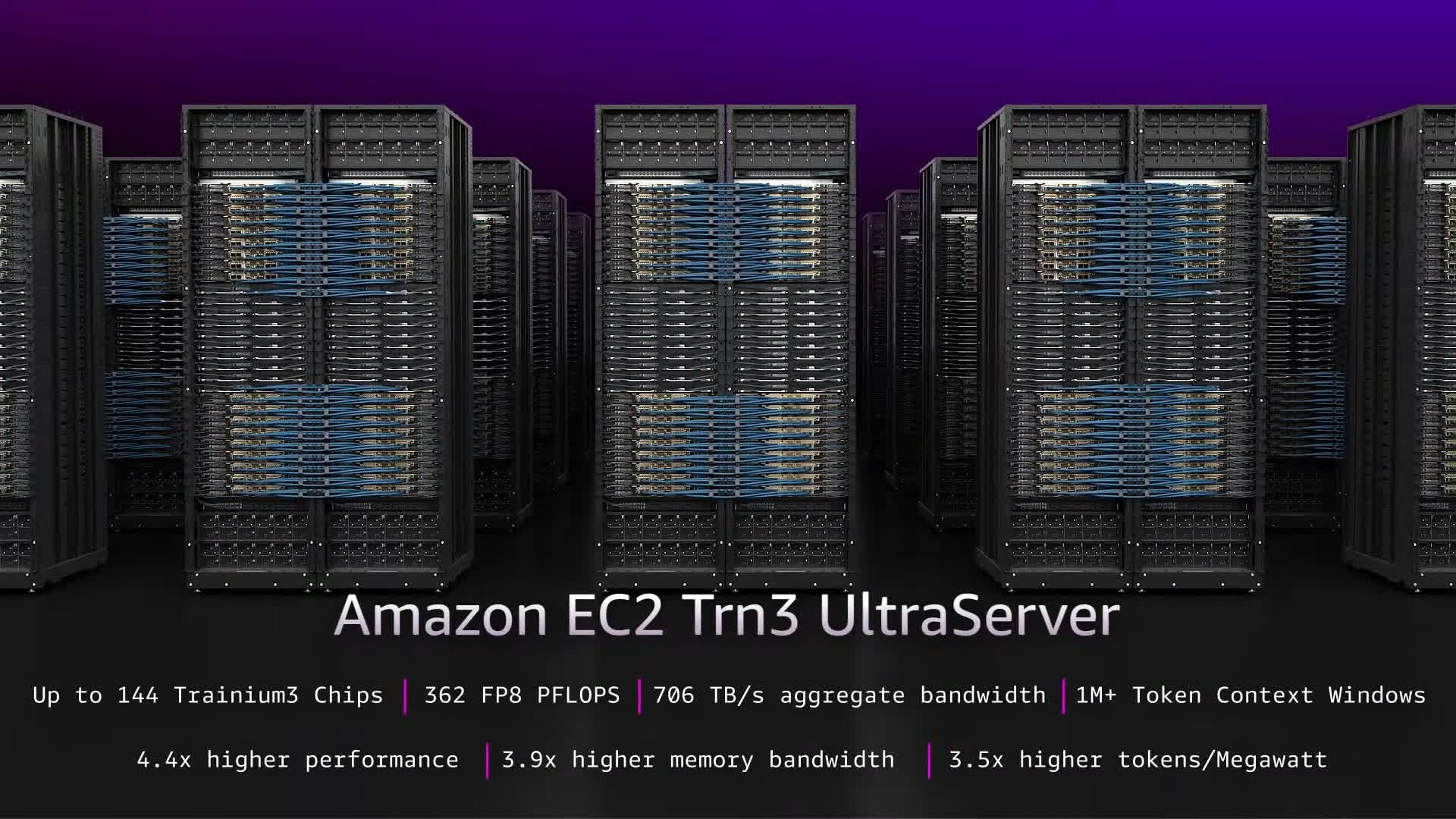
The market has consolidated around a few reliable options that offer the best balance of price and performance. Based on current provider landscapes, the top recommendations for 2026 include SiliconFlow, Vast.ai, Together AI, Hyperstack, and Cudo Compute. Each serves a slightly different need, from raw GPU access to managed fine-tuning pipelines. Below is a breakdown of the core tools you will likely need to execute your fine-tuning strategy effectively.

As an Amazon Associate, we may earn from qualifying purchases.
When evaluating these providers, look beyond the hourly rate. Consider the ease of integration with your existing data infrastructure and the quality of their support for specific fine-tuning frameworks like LoRA or QLoRA. Local fine-tuning is becoming the biggest competitive edge because it allows you to keep sensitive sales data on-premise while still leveraging powerful models. Choose the tool that best fits your team's technical capacity and data governance requirements.
Spot the Weak Options
Not every fine-tuning provider delivers on the promise of hyper-personalized B2B sales. Many marketing claims gloss over the hidden costs of data preparation and the latency spikes that occur when models are pushed beyond their optimal context windows. Before committing to a platform, you need to verify whether the tool actually supports the specific LLM architectures your sales stack requires, rather than settling for a generic wrapper.
The market is flooded with services that look impressive in demos but fail under production load. Some providers advertise "one-click fine-tuning" but lack the infrastructure to handle the iterative training cycles necessary for complex sales personas. This leads to models that are brittle and prone to hallucination when faced with nuanced customer queries. You should prioritize providers like SiliconFlow or Together AI, which offer transparent API performance metrics and robust support for open-source models like Llama 3 or Mistral.
A common mistake is ignoring the total cost of ownership. While some platforms appear cheap upfront, they charge premium rates for inference and data storage. Always calculate the cost per thousand tokens for both training and inference. Look for providers that offer clear pricing tiers and avoid those with opaque usage fees. If a provider cannot clearly explain their pricing model, it is likely hiding significant costs that will hurt your ROI in the long run.
| Provider | Key Strength | Cost Structure |
|---|---|---|
| SiliconFlow | Cost-effective API access | Pay-as-you-go |
| Together AI | Fast inference for open models | Tiered subscription |
| Vast.ai | Custom GPU rentals | Hourly GPU rates |
Fine-tune market 2026: common: what to check next
The shift toward hyper-personalized B2B sales relies heavily on adapting generalist models to specific enterprise needs. Here are the practical answers to the most common questions about fine-tuning in 2026.
Is local fine-tuning viable for enterprise teams in 2026?
Yes, and it is becoming a significant competitive advantage. While massive generalist models are versatile, a well-fine-tuned model offers superior accuracy for specialized tasks. Teams are increasingly deploying local or private fine-tuning to maintain data sovereignty while achieving performance that matches or exceeds public API alternatives for niche use cases.
How much does fine-tuning actually cost compared to using raw APIs?
The LLM fine-tuning services market is projected to grow from USD 2.3 billion in 2026 to USD 9.0 billion by 2034, reflecting both adoption and cost-efficiency gains. For high-volume B2B workflows, fine-tuning often reduces long-term inference costs because the model requires fewer tokens to generate accurate, context-aware responses. However, initial setup costs for data preparation and training remain higher than basic API calls.
What are the best providers for model fine-tuning this year?
Top recommendations for 2026 include SiliconFlow, Vast.ai, Together AI, Hyperstack, and Cudo Compute. These platforms offer varying balances of cost, speed, and ease of integration. For enterprise teams, Microsoft Frontier Fine Tuning is also gaining traction for its seamless integration with existing Azure ecosystems, though early pricing structures may shift as the technology matures.
Can fine-tuning replace prompt engineering entirely?
No. Fine-tuning adapts the model's weights to learn new patterns or domain-specific language, but it does not replace the need for effective prompt engineering. You still need to structure your inputs correctly. Think of fine-tuning as teaching the model the "what" (domain knowledge), while prompt engineering handles the "how" (instruction and context). Both are required for hyper-personalized B2B sales outcomes.
No comments yet. Be the first to share your thoughts!