Why fine-tuning matters in 2026
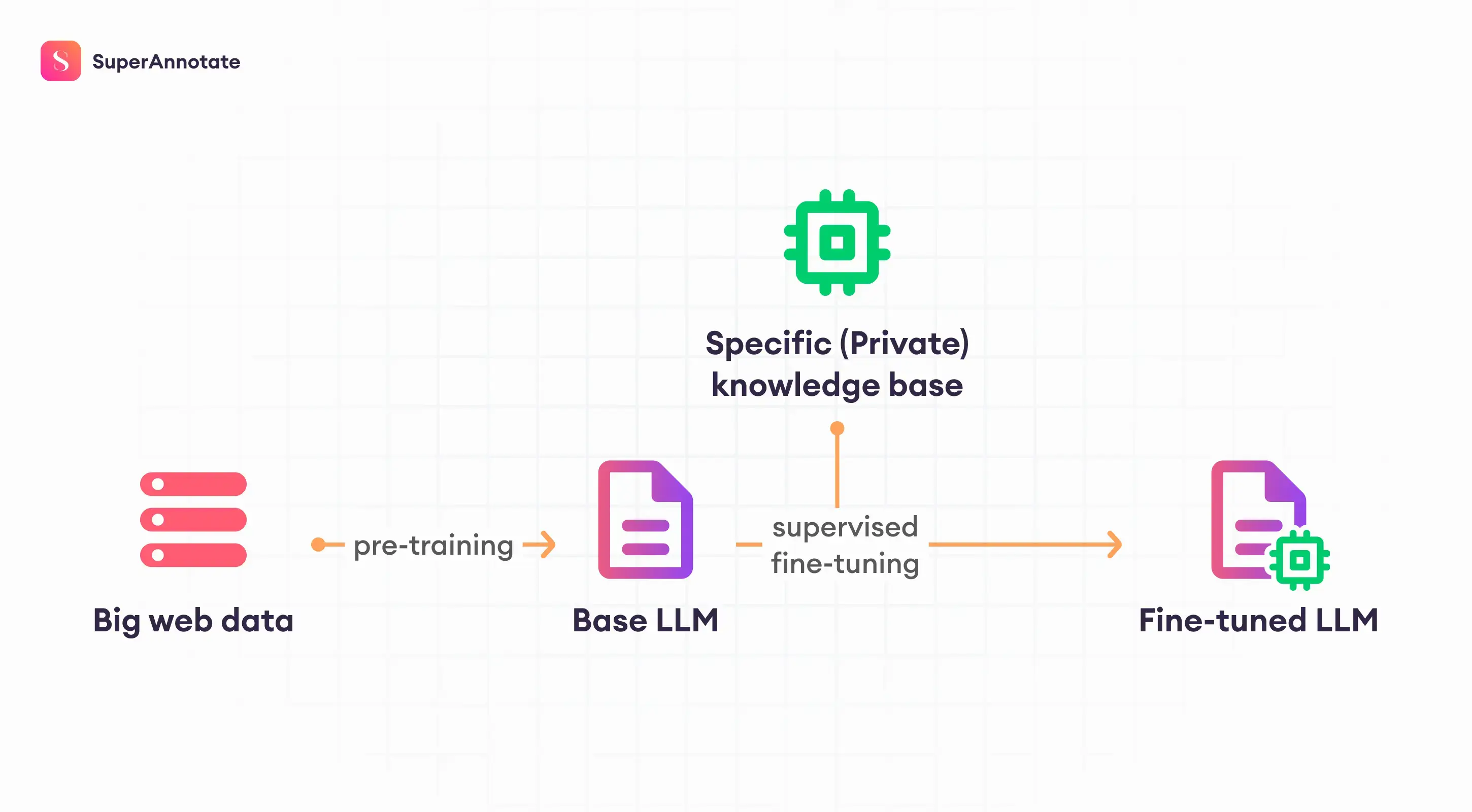
In 2026, fine-tuning an open-source LLM on consumer hardware is no longer a research-lab skill—it is the next career floor for AI engineers building production-grade applications. The shift is driven by the realization that generic base models, while impressive on broad benchmarks, often fail when pushed into specific verticals.
The core tradeoff is simple: general models excel at breadth but lack depth. They score lower on general benchmarks because they are optimized for a wide variety of tasks. However, when you fine-tune a model on your specific domain data—whether it is legal contracts, medical records, or proprietary codebases—you gain significant accuracy in that niche. This local fine-tuning advantage is becoming the biggest competitive edge in 2026, often outperforming larger, more expensive general models in practice.
This transition is enabled by the modern stack. With Python 3.11+ and PyTorch 2.5+, the tooling for efficient fine-tuning is more accessible than ever. Engineers can now iterate quickly, testing different adapters and quantization methods without needing a cluster of A100s. The result is a landscape where accuracy is no longer tied to model size, but to how well the model is adapted to the task at hand.
As we move forward, we will look at the concrete costs, latency implications, and accuracy gains of this approach. The goal is not to replace general models, but to use fine-tuning to bridge the gap between what a model can do in theory and what it needs to do in your specific application.
Fine-tuning vs RAG: When to choose which
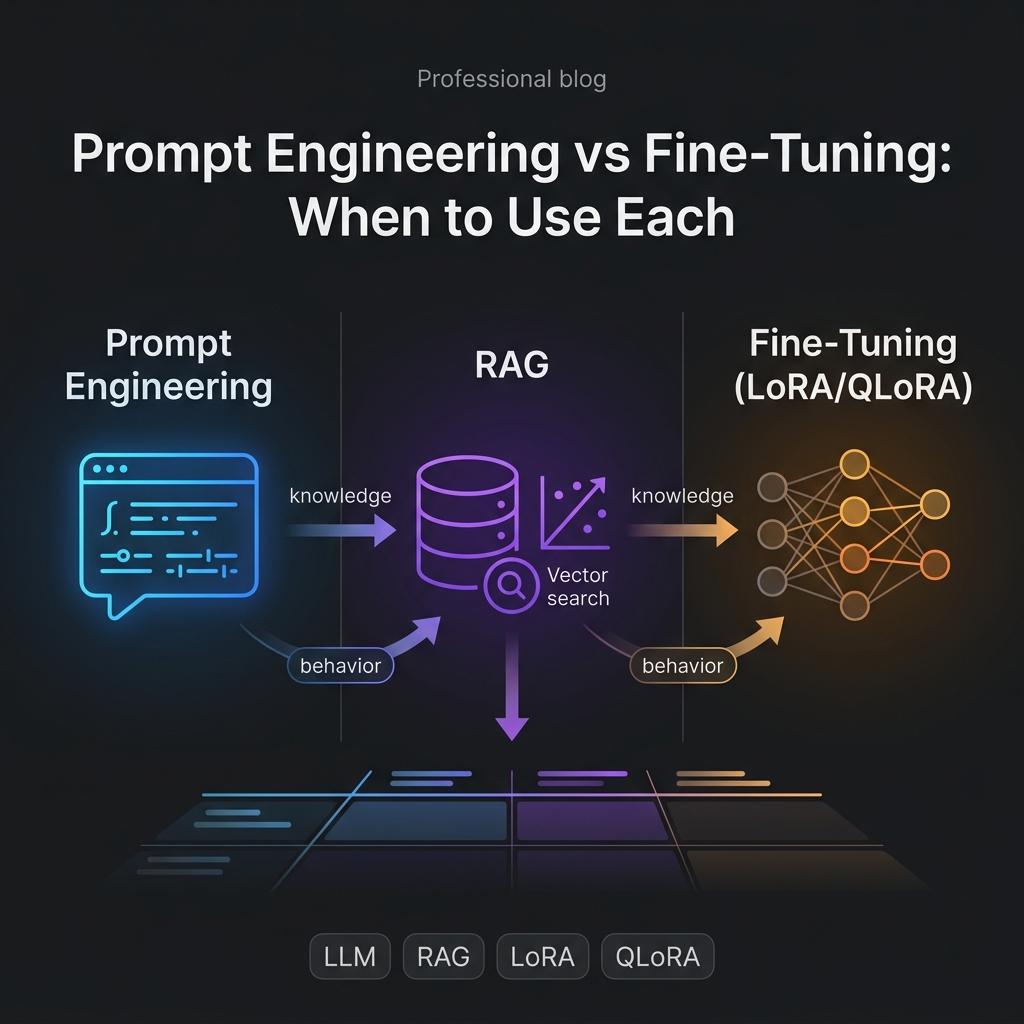
The choice between retrieval-augmented generation (RAG) and fine-tuning is no longer about which technology is "better," but which one solves your specific bottleneck. In 2026, the stack has matured to the point where these tools serve distinct, non-overlapping roles. RAG remains the default for factual accuracy and data freshness, while fine-tuning—specifically via LoRA and QLoRA—is reserved for style adaptation, complex reasoning patterns, and domain-specific formatting.
RAG injects external knowledge at inference time. This makes it ideal for use cases where your data changes hourly or daily, such as customer support tickets, legal documents, or real-time market data. It avoids the hallucination risk of outdated weights and allows you to update your knowledge base without retraining. However, RAG adds latency due to vector search and context window management. It also struggles with tasks that require the model to internalize a specific tone, structure, or logical framework.
Fine-tuning updates the model's weights to bake in knowledge or behavior. This is the right choice when you need consistent output formatting (e.g., JSON schemas for APIs), specialized domain reasoning that general models miss, or a specific brand voice. The tradeoff is higher upfront cost and latency in the training phase, plus the risk of "catastrophic forgetting" if not done carefully. In 2026, full fine-tuning is rarely necessary; parameter-efficient methods like LoRA offer 90% of the accuracy gain for a fraction of the compute cost.
| Dimension | RAG (Retrieval-Augmented Generation) | Fine-Tuning (LoRA/QLoRA) |
|---|---|---|
| Data Freshness | Real-time (updates via vector DB) | Static (requires retraining for new data) |
| Latency | Higher (search + generation overhead) | Lower (inference only, no retrieval) |
| Cost | Low (compute per query) | High (one-time training + storage) |
| Best Use Case | Factual Q&A, dynamic knowledge, compliance | Style adaptation, complex reasoning, structured output |
The decision framework is straightforward: if your problem is "what does the document say?", use RAG. If your problem is "how should the model think or write?", use fine-tuning. For many production systems, a hybrid approach—fine-tuning for style and reasoning, then using RAG for factual grounding—delivers the best accuracy and cost balance.
PEFT methods: LoRA and QLoRA dominance
The 2026 fine-tuning stack has converged on Parameter-Efficient Fine-Tuning (PEFT), with Low-Rank Adaptation (LoRA) and Quantized LoRA (QLoRA) serving as the default choice for almost every team. Full fine-tuning is rarely the right call, as it demands massive VRAM and compute resources that rarely justify the marginal accuracy gains over PEFT methods for most production use cases.
LoRA works by injecting trainable rank decomposition matrices into the model's attention layers, leaving the pre-trained weights frozen. This approach reduces the number of trainable parameters from billions to millions, allowing engineers to fine-tune large models on consumer hardware or entry-level GPU instances. QLoRA takes this further by combining 4-bit quantization with LoRA, enabling the fine-tuning of 70B parameter models on a single 24GB GPU like the RTX 4090.
The technical stack supporting this shift is standardized: Python 3.11+, PyTorch 2.5+, CUDA 12.x, and the Hugging Face ecosystem (transformers, datasets, peft, trl). This combination ensures compatibility and performance, making it easier to deploy fine-tuned models in production without managing complex distributed training clusters.
While QLoRA offers the best cost-to-performance ratio, it introduces slight latency overhead during inference due to the dequantization process. For latency-sensitive applications, standard LoRA on higher-end GPUs (A100/H100) provides a better balance, maintaining near-full-fine-tuning accuracy while keeping inference speeds high. The choice ultimately depends on whether your priority is minimizing training costs or optimizing runtime performance.
Cost and Latency Benchmarks for 2026
The financial and performance reality of fine-tuning in 2026 is defined by the steep price of high-end silicon and the latency penalties of large parameter counts. While open-source frameworks like PyTorch 2.5+ have improved efficiency, the hardware requirements for maintaining accuracy remain substantial. Understanding these tradeoffs is essential for deciding whether to fine-tune locally or rely on API-based inference.
Cloud GPU Pricing and Hardware Costs
The cost of training a model is directly tied to the GPU architecture you select. In 2026, the NVIDIA H100 and A100 remain the dominant choices for distributed fine-tuning due to their memory bandwidth and tensor core efficiency. However, these chips command a premium on cloud marketplaces. For smaller-scale experiments, consumer-grade cards like the RTX 4090 offer a cheaper entry point but lack the NVLink scalability required for larger models.
Cloud providers vary significantly in their per-hour rates. You can expect to pay between $3 and $6 per hour for an H100 on major platforms like AWS, GCP, or Lambda Labs. These rates fluctuate based on spot instance availability and regional demand. For long-running fine-tuning jobs, spot instances can reduce costs by up to 70%, but they introduce the risk of interruption. Always budget for potential retries when using spot pricing.
Inference Latency and Throughput
Latency is the silent cost of fine-tuning. A base model like Llama-3-8B might generate text with sub-100ms latency on a single A100, but a fine-tuned 70B parameter model can push that to several seconds per token. This delay impacts user experience in real-time applications, such as chatbots or coding assistants. The tradeoff is clear: higher accuracy from a larger, fine-tuned model comes at the expense of speed.
To mitigate latency, engineers often use quantization techniques (INT8 or INT4) or distill the fine-tuned model into a smaller architecture. These methods can reduce inference time by 30-50% with minimal accuracy loss. However, they require additional engineering effort and testing. The decision to optimize for latency or accuracy should be driven by your specific use case, not just technical preference.
Benchmarking Your Stack
Benchmarking should be an iterative part of your fine-tuning workflow. Use tools like vLLM or TGI to measure throughput and latency under realistic load conditions. Compare these metrics against your baseline model to quantify the impact of fine-tuning. Document these results to inform future infrastructure decisions. Remember that cloud GPU prices and model performance evolve rapidly; what is optimal today may change next quarter.
| Model | GPU | Est. Cost/Hr | Latency (ms) |
|---|---|---|---|
| Llama-3-8B (Base) | A100 | $3.50 | 80 |
| Llama-3-70B (FT) | H100 | $5.50 | 450 |
| Mistral-7B (FT) | RTX 4090 | $1.20 | 120 |
Top platforms for open-source fine-tuning
Choosing the right infrastructure depends on your team's capacity to manage hardware versus their need for rapid iteration. The 2026 landscape favors platforms that support Python 3.11+ and PyTorch 2.5+ out of the box, reducing friction in the training loop. Below are the leading providers for open-source fine-tuning, categorized by their primary strengths.
Hugging Face: The Ecosystem Standard
Hugging Face remains the default choice for teams prioritizing model discovery and community integration. Its ecosystem allows seamless transition from pre-trained checkpoints to fine-tuned variants, making it ideal for research teams and startups. While the UI is polished, complex distributed training often requires deeper CLI knowledge or integration with third-party orchestrators.
SiliconFlow: Optimized Inference and Training
SiliconFlow has emerged as a strong contender for teams seeking optimized infrastructure without managing underlying GPU clusters. Their platform focuses on high-throughput fine-tuning and low-latency inference, leveraging recent advances in kernel optimization. This makes them particularly suitable for production teams that need to iterate quickly on model accuracy while minimizing infrastructure overhead.
Axolotl: Code-First Flexibility
Axolotl is a YAML-driven fine-tuning framework favored by engineers who prefer code-first workflows. It supports a wide range of architectures and training strategies, including LoRA and QLoRA, with minimal boilerplate. For teams with strong engineering resources, Axolotl offers granular control over the training process, allowing for precise cost and accuracy tradeoffs.
Final Checklist for Enterprise Deployment
Before committing engineering cycles to a fine-tuning project, run through this verification list. The goal is to ensure the tradeoff between cost, latency, and accuracy justifies the effort over simpler approaches like RAG.
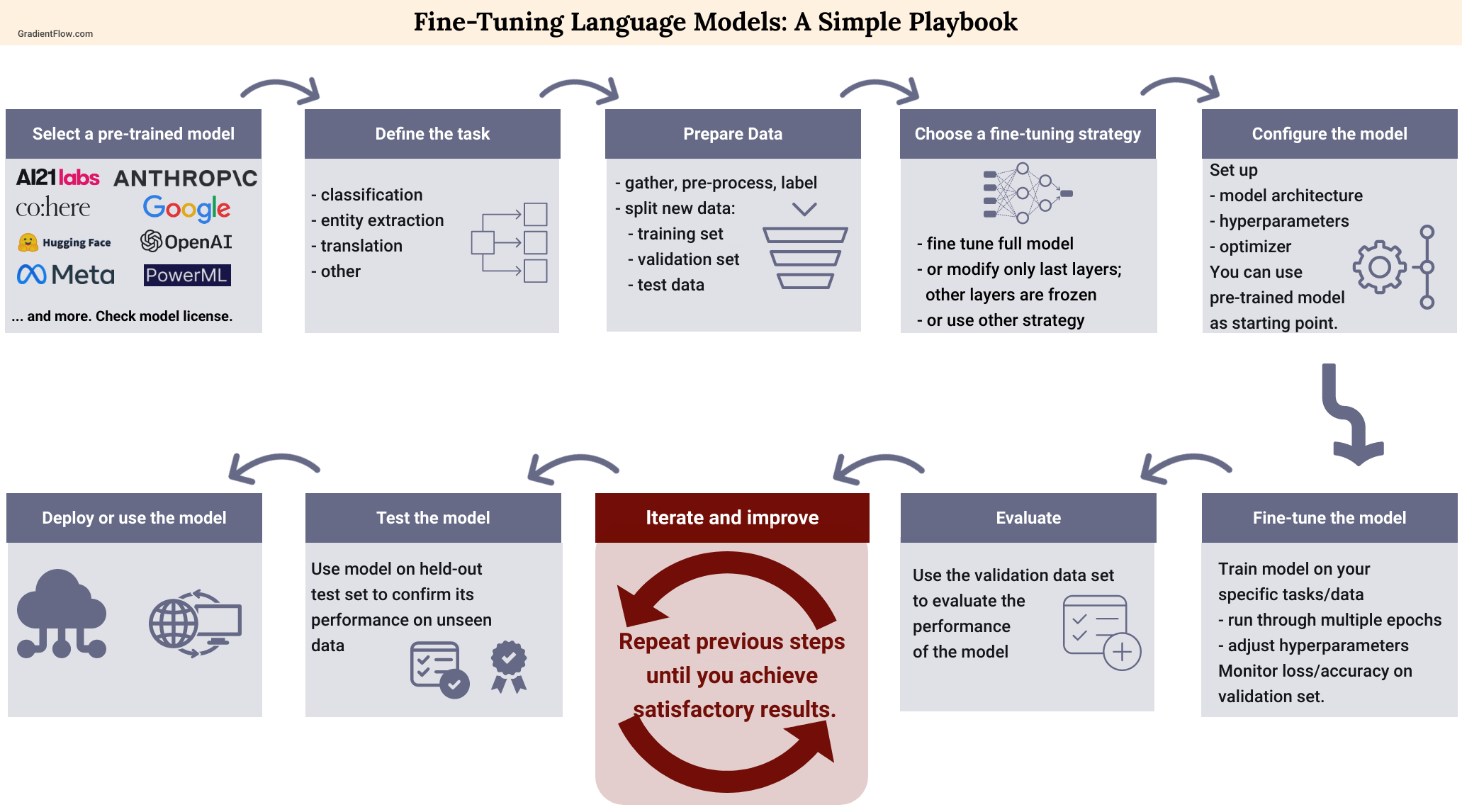
Validate your training data for consistency and noise. Fine-tuning amplifies both signal and bias; poor data leads to model degradation rather than improvement. Ensure your dataset is representative of the 2026 production environment, not historical benchmarks.
Confirm access to sufficient GPU memory for your target model size and batch size. With PyTorch 2.5+ and Python 3.11+, memory optimization techniques like gradient checkpointing are standard, but you still need the raw compute headroom for stable convergence.
Benchmark the inference latency of your fine-tuned model against the base model. Fine-tuning often adds minimal inference overhead, but if your use case requires sub-100ms responses, ensure the model architecture and serving stack can meet those strict SLAs.
Determine when to revert to Retrieval-Augmented Generation. As noted in recent 2026 decision frameworks, fine-tuning is not a silver bullet for knowledge updates. A hybrid approach where fine-tuning handles style and reasoning, while RAG handles factual recall, is often the most cost-effective path.
Frequently asked questions about fine-tuning
Is LLM fine-tuning dead? Not at all. While RAG handles general knowledge retrieval, fine-tuning remains the primary method for adapting models to specific styles, formats, or domain-specific logic. In 2026, the trend has shifted from full parameter updates to efficient adapters like LoRA and QLoRA, which deliver comparable accuracy gains at a fraction of the compute cost.
What is the best model for fine-tuning in 2026? The 2026 stack centers on Python 3.11+, PyTorch 2.5+, and CUDA 12.x, with the Hugging Face ecosystem (transformers, datasets, peft, trl) as the standard tooling. For most teams, open-source models with strong base reasoning capabilities—such as those from Meta or Mistral—offer the best balance of performance and licensing flexibility.
Which LLM is best for coding tasks? Specialized models like Qwen-2.5-Coder or DeepSeek-Coder-V2 are currently leading benchmarks for code generation and debugging. These models are fine-tuned on extensive code corpora and outperform general-purpose models in syntax accuracy and logical reasoning for software engineering tasks.
Can any LLM be fine-tuned? Technically, yes, but practicality varies by model size and architecture. Smaller models (7B–13B parameters) are far more accessible for fine-tuning on consumer or mid-tier hardware. Larger models require significant cluster resources, making low-rank adaptation (LoRA) the only viable approach for most organizations.
No comments yet. Be the first to share your thoughts!