Why 2026 Demands Parameter-Efficient Methods
Use this section to make the LLM Fine-Tuning decision easier to compare in real life, not just on paper. Start with the reader's actual constraint, then separate must-have requirements from details that are merely nice to have. A practical choice should survive normal use, maintenance, timing, and budget. If a recommendation only works in an ideal situation, call that out plainly and give the reader a fallback path.
The simplest way to use this section is to write down the must-have criteria first, then compare each option against those criteria before weighing nice-to-have features.
The 2026 Fine-Tuning Stack and Hardware
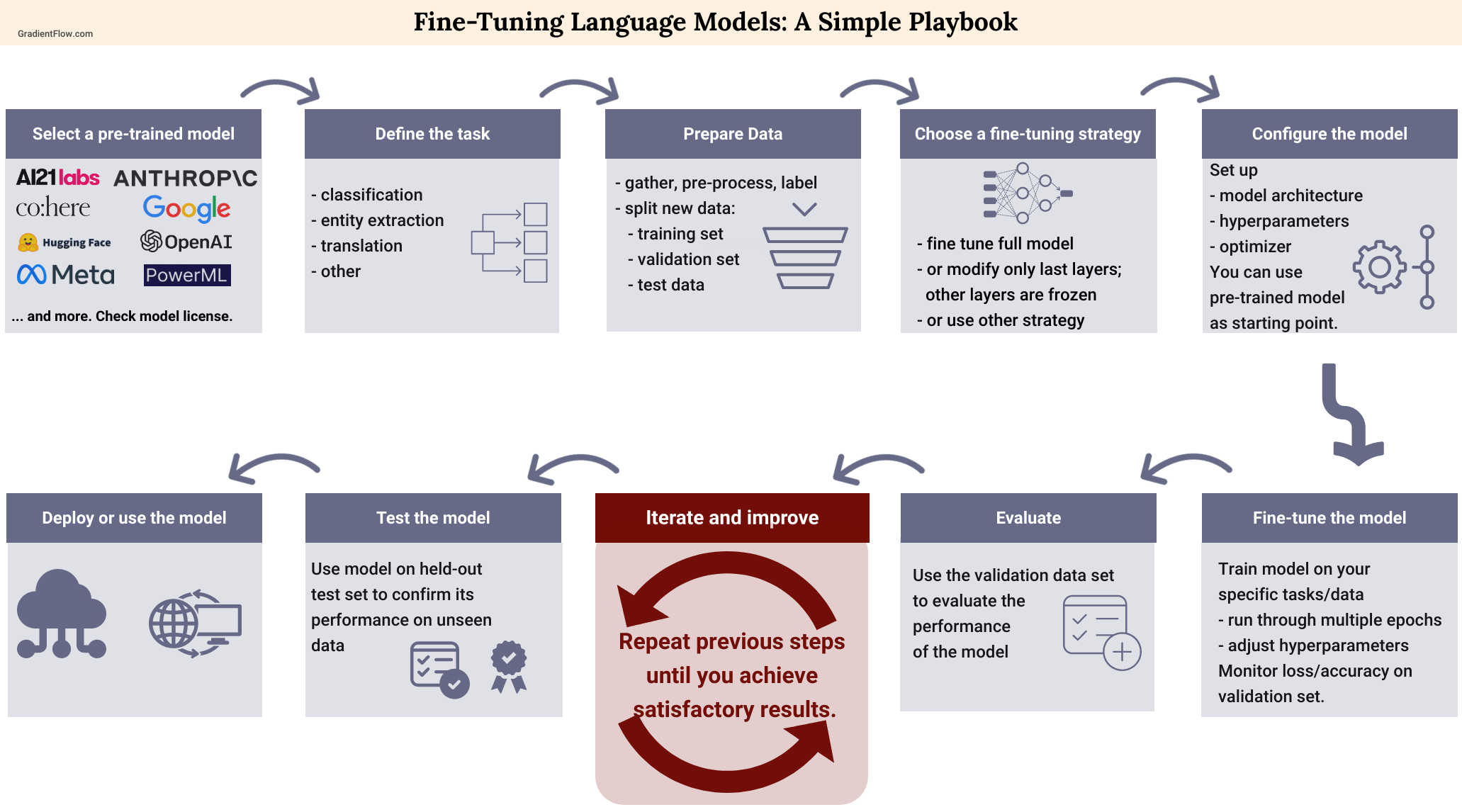
Building a cost-effective LLM in 2026 requires a disciplined technical stack. The baseline environment centers on Python 3.11+, PyTorch 2.5+, and CUDA 12.x. These versions are not merely suggestions; they are the foundation for memory-efficient training. Without them, even small models can exhaust GPU memory, turning a viable project into a financial loss.
The Hugging Face ecosystem—specifically transformers, datasets, peft, and trl—provides the necessary tools to execute Low-Rank Adaptation (LoRA) and QLoRA. This stack allows you to fine-tune models with significantly fewer resources than full fine-tuning. However, the hardware remains the primary constraint. Minimum requirements typically include 16GB of VRAM for 7B models using QLoRA, but 24GB or more is standard for stable training of larger architectures.
The choice of hardware directly impacts your burn rate. Full fine-tuning demands massive GPU clusters, while PEFT methods allow for single-GPU execution. Understanding this trade-off is essential for risk management. Underestimating memory requirements leads to failed training runs, wasted compute credits, and delayed product launches.
LoRA vs QLoRA: Choosing the Right Approach
Selecting between Low-Rank Adaptation (LoRA) and Quantized LoRA (QLoRA) is a fundamental capital allocation decision. The choice dictates your hardware exposure and the precision of your model's output. Treating this as a mere technical preference ignores the operational risk: underestimating VRAM requirements leads to training failures, while over-provisioning destroys margins.
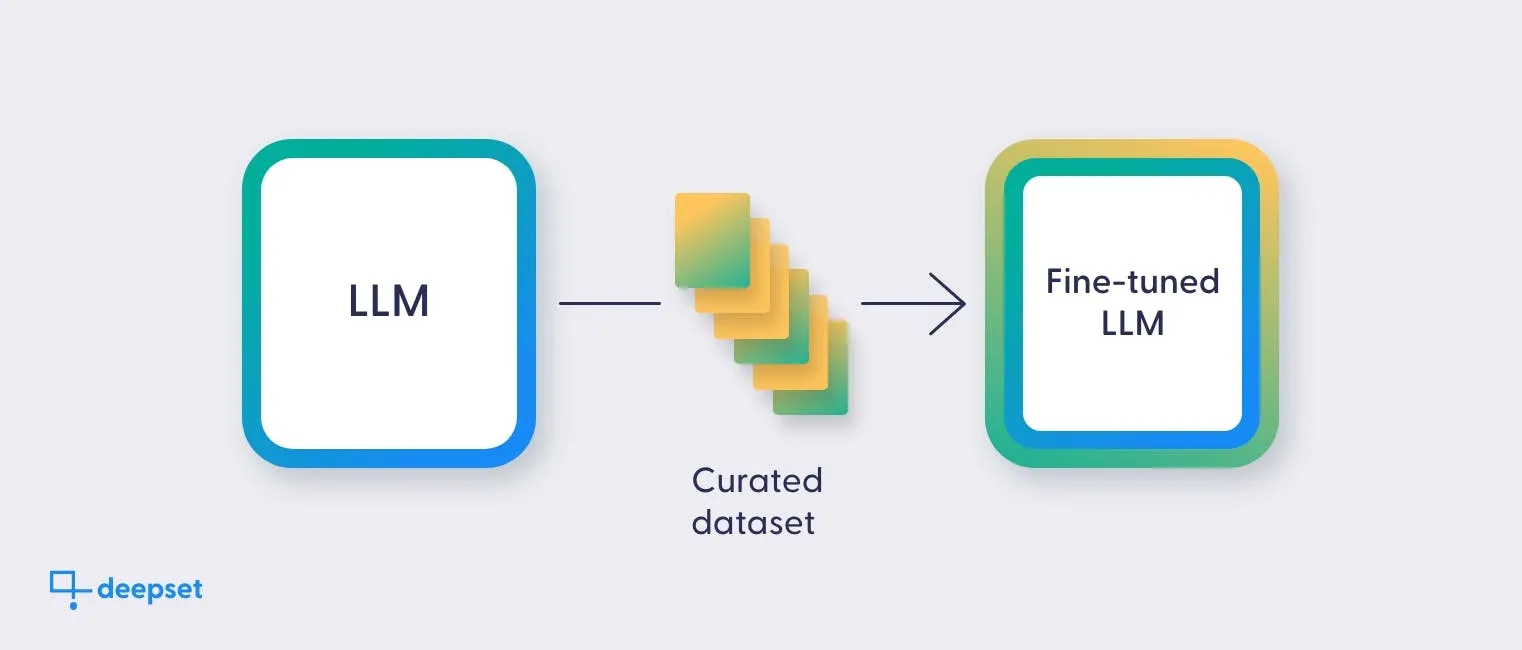
LoRA remains the standard for high-fidelity adaptation. By freezing the pre-trained weights and injecting trainable rank decomposition matrices into each layer, it significantly reduces the number of parameters updated. This method is ideal when your primary constraint is accuracy rather than infrastructure cost. It preserves the full precision of the base model, ensuring minimal degradation in complex reasoning tasks.
QLoRA introduces 4-bit NormalFloat (NF4) quantization to the base model, drastically shrinking the memory footprint. This allows training on consumer-grade GPUs or smaller enterprise instances. The trade-off is a slight reduction in precision, which may impact nuanced language tasks. For most commercial applications, the accuracy delta is negligible compared to the massive savings in compute costs.
| Feature | LoRA | QLoRA | Risk Profile |
|---|---|---|---|
| Base Model Precision | Full (16-bit) | Quantized (4-bit NF4) | QLoRA may lose subtle nuance |
| VRAM Usage | High | Low | LoRA requires expensive GPU clusters |
| Training Speed | Fast | Moderate | QLoRA quantization adds overhead |
| Best Use Case | High-stakes reasoning | Cost-effective scaling | Misalignment wastes capital |
The decision matrix hinges on your specific risk tolerance. If your application demands maximum fidelity for critical decision-making, LoRA is the safer bet. If your goal is rapid iteration and cost efficiency, QLoRA offers a robust alternative. Monitor hardware utilization closely; inefficiency here is the silent killer of AI project margins.

Data Preparation for Custom LLM Deployment
In high-stakes model deployment, dataset quality acts as the primary risk factor. Just as a flawed financial forecast can trigger market volatility, a biased or noisy training corpus will produce an LLM that fails under operational pressure. Fine-tuning is not a magic wand; it is a supervised learning process where the model’s weights are updated based on labeled examples. If the input data is imprecise, the model learns imprecision, leading to costly hallucinations or incorrect outputs.
The cornerstone of effective instruction tuning is format consistency. Models in 2026 rely on structured inputs that clearly delineate instructions, context, and desired outputs. Inconsistent formatting introduces noise, forcing the model to spend computational resources decoding structure rather than learning the underlying task. Standardized templates reduce this variance, ensuring the model focuses on semantic accuracy. This discipline mirrors the rigorous data validation protocols used in financial auditing, where every data point must be traceable and consistent.
Data cleaning is not optional; it is a prerequisite for stability. Removing duplicates, filtering low-quality samples, and correcting factual errors before training prevents the model from reinforcing misconceptions. A clean dataset ensures that the fine-tuning process converges on the intended behavior rather than overfitting to artifacts or biases in the raw data. The cost of this upfront work is negligible compared to the expense of retraining a model that has learned from flawed inputs.
Prioritize official, primary sources for your training data whenever possible. The reliability of your LLM is directly proportional to the credibility of its training corpus. Treat data preparation with the same rigor as capital allocation: every hour spent cleaning and structuring data is an investment in model stability and long-term performance.
Top Platforms for Fine-Tuning Open Source LLMs
Selecting the right infrastructure for fine-tuning is a capital allocation decision. The cost of compute failure or inefficient training runs directly impacts your model's ROI. The market has consolidated around five primary platforms that balance ease of use with technical depth for 2026.
SiliconFlow
SiliconFlow offers a streamlined API-first approach, ideal for teams prioritizing rapid iteration over heavy infrastructure management. Their platform abstracts much of the PEFT complexity, allowing you to deploy LoRA adapters with minimal configuration overhead. This reduces the risk of operational errors during the fine-tuning process.
Hugging Face
As the de facto standard for open-source models, Hugging Face provides the most comprehensive ecosystem. Their Hub integrates directly with training libraries, making it the safest choice for reproducibility. The platform's community-driven datasets and pre-trained models reduce the time spent on data curation, keeping your burn rate predictable.
Firework AI
Firework AI specializes in high-performance inference and fine-tuning for creative and reasoning tasks. Their infrastructure is optimized for low-latency applications, making it a strong candidate for production-grade deployments. If your primary goal is to refine models for customer-facing APIs, their managed service offers significant latency advantages.
Axolotl
Axolotl is a configuration-driven training framework that appeals to engineers who need granular control. It supports a wide variety of PEFT techniques and model architectures out of the box. This flexibility allows you to experiment with different adapter strategies without rewriting code, though it requires a steeper initial learning curve.
LLaMA-Factory
LLaMA-Factory provides a unified interface for training various LLMs, including LLaMA, Mistral, and Qwen. Its focus on ease of use makes it accessible for teams with limited MLOps resources. The platform handles most of the data preprocessing and training loop management, reducing the administrative burden on your engineering team.

As an Amazon Associate, we may earn from qualifying purchases.
Evaluation and Deployment Checklist
Before moving a fine-tuned model to production, treat validation like a risk audit. A single failure in latency or safety can erode user trust faster than a market correction. This checklist ensures your PEFT-trained model meets operational standards without inflating inference costs.
Compare your fine-tuned model against the base PEFT checkpoint using standardized benchmarks like MMLU or human evaluation sets. Establish a performance delta that justifies the added complexity. If the gain is marginal, the inference cost may not be worth the deployment.
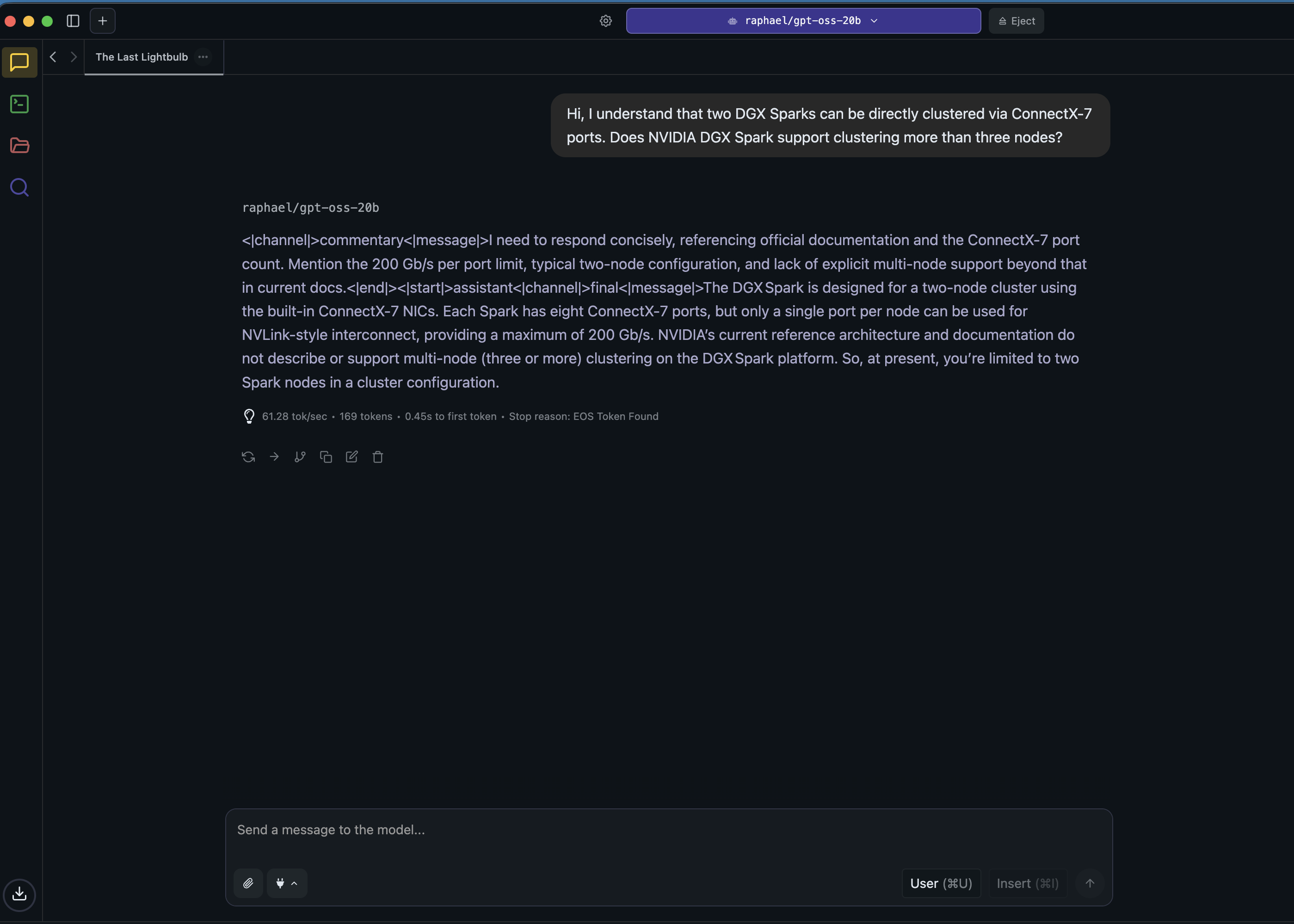
Measure tokens-per-second under peak load. Fine-tuning often increases parameter count or changes attention patterns, which can spike latency. Ensure your GPU allocation can handle concurrent requests without queueing delays, which directly impacts user retention.

Run adversarial prompts to check for jailbreak vulnerabilities or hallucination spikes. A model that performs well on benchmarks but fails safety checks is a liability. Use automated red-teaming tools to simulate edge cases before public release.
Set up real-time dashboards to track inference costs and output quality. Model drift can occur as user inputs diverge from training data. Regularly review these metrics to adjust scaling or retrain if performance degrades, keeping operational expenses in check.
No comments yet. Be the first to share your thoughts!