
Ai compliance 2026 limits to account for
The regulatory landscape shifts from proposed guidelines to enforceable law in 2026. The EU AI Act enters full application on August 2, 2026, creating a binding framework for high-risk AI systems. Organizations fine-tuning models for niche markets must now align their training data and output monitoring with these strict requirements. Failure to comply risks significant fines and operational shutdowns in key European markets.
United States regulation follows a fragmented path. While no single federal law mirrors the EU’s structure, a patchwork of state laws governs algorithmic accountability and biometric privacy. Companies operating across borders must navigate these diverging standards, often requiring separate compliance protocols for different regions. This complexity forces a shift from voluntary ethical guidelines to mandatory legal audits.
The primary risk in 2026 is not just legal penalties but the loss of trust. Consumers and enterprise clients demand transparency about how AI models are trained and deployed. Organizations that treat compliance as a post-launch checkbox will struggle to maintain market share. Instead, compliance must be integrated into the fine-tuning process, ensuring that niche-specific data does not violate copyright or privacy laws.
For market analysts, this regulatory shift represents a significant barrier to entry for small players. Larger firms with dedicated legal teams can absorb these costs, potentially consolidating market power. The trend suggests that AI innovation will increasingly favor organizations with robust governance structures, making compliance a strategic advantage rather than just a legal obligation.
Ai compliance 2026 choices that change the plan
Fine-tuning large language models for niche markets creates a tension between model performance and regulatory adherence. By 2026, the EU AI Act is fully enforceable, and US state laws create a fragmented compliance landscape. Organizations must evaluate specific tradeoffs to ensure their proprietary models meet legal standards without sacrificing utility.
The primary challenge lies in data provenance and risk classification. Niche models often require specialized datasets that may contain sensitive personal information or copyrighted material. Determining whether a model falls under "high-risk" categories dictates the level of documentation, human oversight, and transparency required before deployment.
Evaluate these concrete factors when balancing compliance with business goals:
| Factor | Compliance Impact | Business Tradeoff | Risk Level |
|---|---|---|---|
| Data Provenance | Must verify source legality under EU AI Act Art. 10 | Training data curation slows development cycles | High fines if copyrighted or PII data is used |
| Risk Classification | High-risk models require conformity assessments | Limits deployment speed in regulated industries | Legal liability if misclassified as low-risk |
| Transparency | Mandatory disclosure of AI-generated content | May reduce user engagement if clearly marked | Reputational damage if opaque |
| Human Oversight | Required for high-risk decision-making systems | Increases operational costs and latency | Automated errors without human review |
The compliance burden is not uniform. Low-risk models, such as spam filters or basic chatbots, face minimal restrictions. However, niche applications in healthcare, finance, or hiring often trigger high-risk classifications. This distinction forces teams to invest heavily in documentation and testing protocols that are unnecessary for simpler use cases.
Technical performance must also be weighed against regulatory constraints. Aggressive fine-tuning can improve accuracy but may inadvertently amplify biases present in the training data. Bias mitigation requires additional data cleaning and testing, which consumes resources and time. The goal is to find a balance where the model is both effective and auditable.
Market dynamics further complicate these decisions. Enterprise AI spending is shifting toward compliance-ready solutions. Companies that prioritize regulatory alignment from the start avoid costly retrofits later. The cost of non-compliance now includes not just fines, but also loss of customer trust and market access.
How to choose the right fine-tuning path
Fine-tuning LLMs for niche markets is no longer a technical experiment; it is a compliance requirement. By 2026, the EU AI Act is fully in force, and US state laws create a patchwork of algorithmic accountability rules. Choosing the wrong model architecture or data source can trigger regulatory penalties that outweigh any efficiency gains.
The decision framework below helps you select the appropriate fine-tuning strategy based on your risk profile, data sensitivity, and operational scale. Each step addresses a specific compliance or performance constraint.
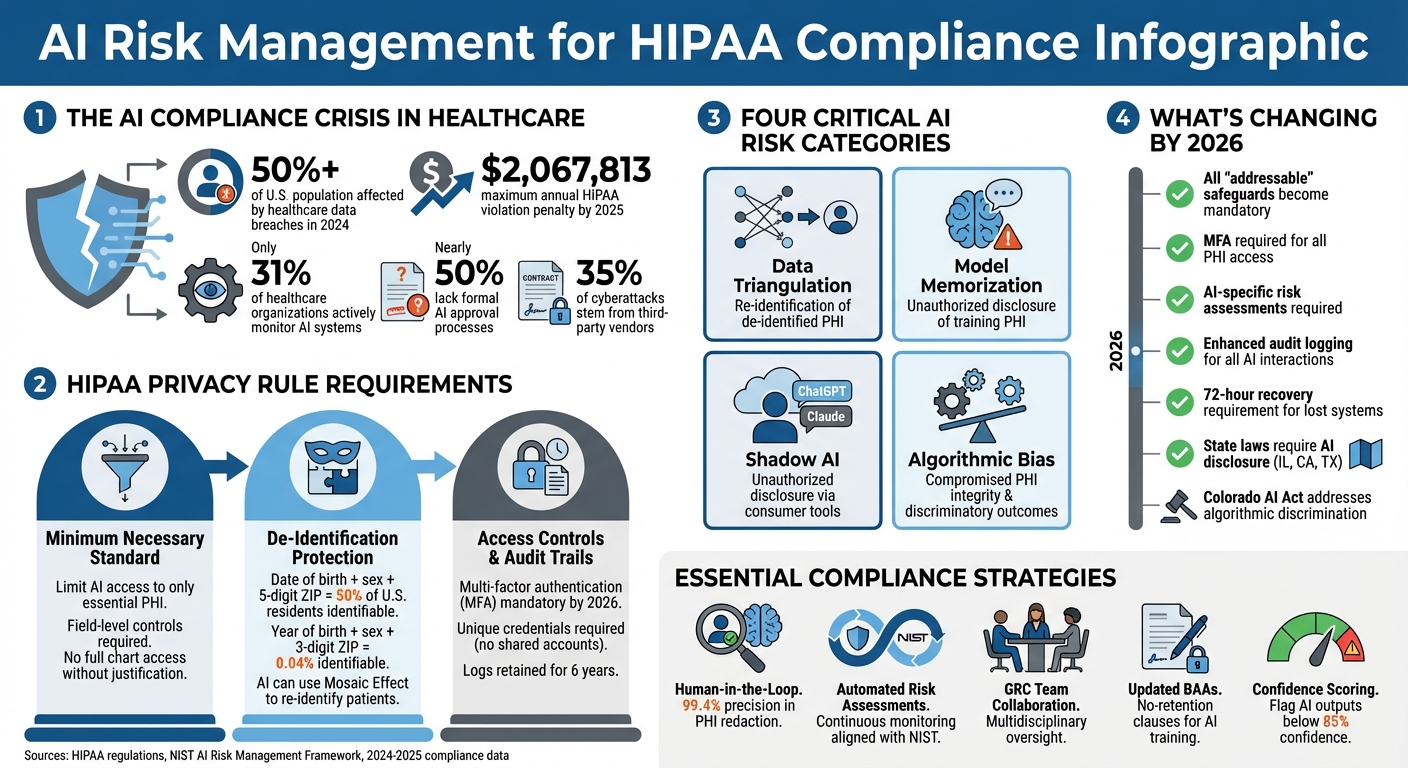
Before any training begins, you must document the origin of every data point. The EU AI Act requires transparency for high-risk AI systems. If you cannot prove where your training data came from, or if it contains copyrighted material without license, you cannot legally deploy the model. Create a data inventory that flags proprietary, public, and licensed sources.

Not all base models are created equal for compliance. Open-weight models allow for greater scrutiny of weights and biases, which is essential for audit trails. Proprietary models may offer better out-of-the-box performance but often lack the transparency required by strict regulatory frameworks. Choose a base model that supports detailed logging and explainability features.

Determine whether you need full fine-tuning or parameter-efficient methods like LoRA. Full fine-tuning updates all model weights, which is necessary for complex niche domains but increases the risk of "catastrophic forgetting" and makes audit logs larger. For most niche applications, parameter-efficient fine-tuning reduces computational costs and simplifies the compliance documentation required for each version change.
Regulators expect human oversight for high-stakes decisions. Build a validation layer where human experts review model outputs before they reach the end-user. This is not just a best practice; it is a legal safeguard. Document the criteria for human review and the frequency of audits to demonstrate that you are actively managing AI risk.
Compliance is not a one-time event. Models drift as market conditions change. Set up continuous monitoring for bias and performance degradation. If your niche market evolves, your model must adapt without violating data privacy rules. Regular audits ensure that your fine-tuned model remains aligned with both business goals and regulatory standards.
Spotting Weak Options in AI Compliance
As the EU AI Act enters full application in August 2026, vendors often push "compliance-ready" fine-tuned models that lack actual regulatory alignment. The gap between marketing claims and legal reality creates significant liability for niche market operators. Identifying these weak options requires looking past broad assurances and examining specific data handling practices.
The "30% Rule" Misconception
Many providers claim that replacing 30% of training data with proprietary content ensures compliance. This is a fabricated metric with no basis in the EU AI Act or US state laws. The legislation focuses on transparency, risk assessment, and data governance, not arbitrary data replacement percentages. Relying on this "rule" leaves your model vulnerable to audits and potential fines.
Vague Data Provenance Claims
Look for vendors who cannot provide a clear lineage of their training data. The AI Act requires detailed documentation of data sources, especially for high-risk applications. If a provider offers only a high-level summary of "ethically sourced" data without specific provenance records, it is a red flag. You need granular control and verifiable records to demonstrate compliance during regulatory reviews.
Ignoring State-Level Nuances
Compliance is not just federal or EU-wide. US states have enacted a patchwork of AI laws spanning algorithmic accountability, transparency, and biometric privacy. A model that claims "global compliance" but ignores specific state requirements, such as California’s AI transparency laws or New York’s bias audit mandates, is not truly compliant. Ensure your vendor’s solution addresses these localized regulatory demands.
Ai compliance 2026: what to check next
The regulatory landscape has shifted from guidance to enforcement. By August 2026, the EU AI Act becomes fully applicable, creating a binding framework for risk-based AI governance. Simultaneously, US states maintain a patchwork of active laws covering algorithmic accountability and biometric privacy, while federal executive orders continue to shape federal procurement standards. Organizations must now treat compliance as a continuous operational requirement rather than a one-time audit.
What is the AI legislation in 2026?
The primary global driver is the EU AI Act, which entered into force in August 2024 and becomes fully enforceable on August 2, 2026. This law categorizes AI systems into four risk tiers: unacceptable, high, limited, and minimal. High-risk systems, including those used in critical infrastructure or hiring, face strict transparency and data governance obligations. US companies operating in Europe must align their fine-tuning and deployment pipelines with these specific risk classifications to avoid significant penalties.
What 3 jobs will not be replaced by AI?
While AI automates routine cognitive tasks, it struggles with roles requiring complex physical dexterity, deep emotional intelligence, and high-stakes ethical judgment. Jobs in skilled trades (such as electricians and plumbers) remain resistant to automation due to unstructured physical environments. Similarly, roles in healthcare management and social work rely on nuanced human interaction that AI cannot replicate. Finally, senior legal and compliance officers are essential for interpreting ambiguous regulations and assuming liability for AI-driven decisions.
What is the 30% rule for AI?
In the context of 2026 compliance, the "30% rule" is not a universal federal standard but often refers to specific state-level thresholds or internal corporate governance policies. For example, some emerging US state laws require human-in-the-loop review for any automated decision that impacts a user by more than a certain percentage (e.g., credit denial or hiring rejection). Additionally, some compliance frameworks suggest that no more than 30% of a critical workflow should be fully automated without manual oversight to mitigate hallucination risks.
What is the AI risk 2026?
The dominant risk in 2026 is not just technical failure but regulatory fragmentation and audit readiness. Gartner projects that over 50% of large enterprises will face mandatory AI compliance audits. The primary danger lies in "compliance debt": organizations using fine-tuned models without proper documentation of training data provenance, bias testing, or model cards. When regulators demand proof of how a niche-market model was trained, the lack of transparent logs becomes a legal liability.
No comments yet. Be the first to share your thoughts!